Showing posts with label terminology. Show all posts

Tuesday, April 14, 2009

Review: Stinky

Trawling the Internet for articles to link to in my link-blogging feature at Blog@ the other day, I cam across this School Library Journal article that highlights a few of the fresh comics faces whose work for younger readers received Eisner nominations.

One of them was a Ms. Eleanor Davis, whose book Stinky (Raw Junior) was nominated in the “Best Publication for Kids” (Which looks like a particularly competitive category; Andi Watson’s Princess at Mighnight, Akira Toryiama’s Cowa! and Tiny Titans are also in the running).

I had not heard of Stinky until the nominations were announced (In fact, after the original announcement that Francoise Mouly would be doing a kids line of books, I hadn’t heard hardly anything about any of the Raw Junior “toon books”. A fact which leads me to believe that whoever is selling the things really oughta sell ‘em a little harder, and/or the rest of the comics blogsphere echo chamber should pay a little more attention to them, because that tends to be how I hear about a lot of books that I don’t hear about from the publisher’s or through publishing industry publications).

But then, that’s one of the good things about the Eisners. If their judges think a book is worth consideration for the award, with few exceptions it is probably a pretty good book, or at least a book I ought to read. So, having just read Otto’s Orange Day, I placed a reserve on Stinky at my local library.

Like Otto’s Orange Day, Stinky is a nicely designed book. Mouly and Jonathan Bennett share a design credit for it again, and apparently the entire line is designed with a unified look. I imagine they will look quite nice all lined up next to one another on a kid’s book shelf.

Stinky is the story of Stinky, a kid-sized swamp monster who is rather aptly named. He eats onions constantly, emanates stink lines and flies with visible dotted-line flight patterns, and his best friend is a huge, repulsive, equally smelly toad named Wartbelly.

This is what Stinky looks like:

As with Otto’s Orange Day, this is a very simple story, divided into three chapters: One that introduces the characters and a conflict, a second in which the conflict escalates and a third in which there’s a resolution and a lesson learned.

In the first chapter we meet Stinky and follow him on what starts like a normal day—brushing his teeth with a stick and a tube marked “Crust,” breakfasting on a pickled onion, taking Wartbelly for a wagon ride through the muddy swamp, right up to the edge of town, where he gets skittish.

See, he hates kids, since they hate gross things and like non-gross things. So he’s extremely unhappy to see that a kid, who goes by the name Nick, has just built himself a treehouse at the edge of the swamp.

Stinky tries a variety of plans to drive Nick away once and for all (including hiding his hammer in the alligator-infested heart of the swamp), but Nick keeps embracing the various gross, stinky and scary things Stinky throws at him.

Ultimately, Stinky learns that kids aren’t as horrible as he thought, and, in fact, Nick at least seems to be a lot like Stinky.

It’s constructed elegantly enough, and Davis’ dialogue sounds natural without ever being too obvious.

Being a grown-up, it was the art that I took the most pleasure in. The image above probably gives a pretty good idea of Davis’ flat, simple character design and her big, thick lines, but what I liked best about her work here was the level of detail she packed into the panels.

Not necessarily in the style—it never gets crowded with lines or anything—but in how much she puts in the panels.

The page is a splash of Stinky’s bedroom, for example, and it’s jam-packed with leaves, rocks, mushrooms and jars of pickled produce. Bats hang from the ceiling, cockroaches sleep with manga sleep-bubbles swelling from their noses, a cloud of flies hovers above Wartbelly, a spider hangs on a web above them, a little knife and fork in two of its arms, and a bluebird sits smiling on the window sill, a clothespin over its beak to block out the smell.

Davis similarly fills most of the panels with little animals in the margins. Rats play cards o his floor, a spider knits a sock with a ball of yarn in a tree branch, a mole parent reads a book to baby moles in an easy chair in their burrow. I love looking at the pages and hunting out the details, and I assume they would make this a great book to be read to for kids, as there’s so much to keep little eyes busy while the readers handles the words for them.

It’s an all-ages book, in the best sense of the word.

********************

Here’s a scan of the inside back cover, which is devoted to a map including all the locales Stinky and Nick pass through:
That possum tree really creeps me out.

********************

This is a really thorough profile on the Toon Books line; I really liked the part where Mouly expressed her preference for just calling them “comics.” “They're great books,” she said, “but not novels.” Yeah. I know the ship on what we call these things has sailed, and “graphic novel” is the term we’re stuck with for now, but I do like just calling all comics “comics.” Stinky may be a hardcover and have a spine, but it’s more of a comic book than a “graphic novel” or “graphic novella” or “graphic book.”

Thursday, March 05, 2009

Pardon me a moment while I point and laugh.

Venerable newspaper The New York Times is introducing a new best sellers lists focused on comics/graphic novels.

They've decided to eschew the obvious name for such a list, "Graphic Novels Best Sellers," or the more accurate "Comics Best Sellers," for their own made-up term, "Graphic Books Best Sellers."

Look, I know neither "graphic novels" nor "comics" are perfect words with which to describe the medium they're used to describe, but that ship sailed over a decade ago: They're "graphic novels." The people who make them, the publishers who publish them, the writers and critics who write about and criticize them, the librarians who order them and make them available to communities to borrow, all call them "graphic novels."

Are there significant differences between Starman Omnibus Vol. 2 (a collection of originally serially published comic books republished between two covers as if it were a single work), Complete Terry and the Pirates Vol. 6 (a collection of comic strips republished between two covers as if it were a single work), Watchmen (which was originally serially published as comic books 20 years ago, but was never an ongoing and has existed primarily as a single, complete work since) and, let's say, The Joker (an original graphic novel published originally as a graphic novel)?

Yes, of course there are, but the differences are fewer and less significant than the similarities, and, for convenience's sake, the word "graphic novel" has become the umbrella term.

So get out of here with this "graphic book" junk. (I should note that I spend a lot of time talking to librarians, and I do hear them using the word "graphics" more and more, which makes a bit more sense, as it doesn't alter the word "graphic novel" so much as shorten it, similar to the way "comics" evolved from "comic books." So I will accept the NYT having a "Graphics Best Seller List" before a "Graphic Books Best Seller" list).

I have a feeling the NYT will eventually change that from "books" to "novels" shortly; even if "books" is more accurate and inclusive than "novels," momentum alone would dictate sticking with "graphic novels." Unless the New York Times is a far more powerful force in the world of book publishing than I think, in which case perhaps they can get everybody else to abandon the term "graphic novels" in favor of "graphic books," in which case good for them.

But wait! That's not even the lamest part of their announcement!

Check this shit out, from George Gene Gustines'* piece on the new list:


Comics have finally joined the mainstream. Anticipation for the live-action film version of “Watchmen,” the dark and violent superhero opus that saw its birth in comic books and arrives in theaters on Friday, has built to a nationwide boil. And today The Times introduces three separate lists of the best-selling graphic books in the country: hardcover, softcover, and manga. We’ll update those lists weekly in this space, and offer a few observations along the way.


To which I say: AHH Ha ha ha ha ha ha ha ha! Oh, really? Comics have finally joined the mainstream? Just now? Not, like, in the 1940s, when they sold in the millions? Not twenty goddam years ago when the plague of "Bam! Biff! Pow! Comics aren't just for kids anymore!" and "Holy Christallmighty, Batman!" headlines were unleashed by newspapers upon the world? Not 17 years ago, when Maus won a Pulitzer? Not ten years ago, when manga imports went from a steady stream into a Biblical flood? Or when Blade, X-Men and Spider-Man ushered in a decade of Hollywood comic book adaptations? Not about five years ago when the publishing industry exploded the number of graphic novels they began publishing, competing with the traditional comics publishers for talent? But just now?

Huh.

And what are the reasons for that? The one-two punch of Watchmen being made into a movie and The New York Times fucking saying so?

Jesus.

Anyway, after that dumb-ass paragraph, it's actually a pretty interesting read.

I was quite pleased to see Beanworld included among all the genre stuff in the hardcover category, because it is such a unique work. And because it's probably the best thing I've read so far this year. Also, it was nice to see Marvel's latest Incredible Hercules collection there, as it doesn't sell gangbusters in the Direct Market, so hopefully this means it's selling like hotcakes elsewhere, and will continue to be published for a while yet.

The "Graphic Books Best Seller List (Softcover)" includes the latest Showcase: Superman Family volume, which I'm happy to see, as I love the Showcase Presents program and hope it's making enough money that DC will keep it up indefinitely. I've often wondered how these (and the Essentials did outside the Direct Market).

I suppose one could argue about the need to separate the manga "graphic books" from the non-manga "graphic books," but perhaps that's just so the "graphic books" aren't 60% Naruto every month.


*George Gene Gustines is an awesome name.

Wednesday, August 13, 2008

Some of Raymond Briggs' children's books, which are actually comics

As I mentioned yesterday, I have a review of Drawn+Quarterly’s new edition of Raymond Briggs’ Gentleman Jim over at Newsarama.com.

I rather enjoyed the book, which is pretty amusing, but I got more value out of the introduction than the story itself, as it introduced me to the work of Raymond Briggs.

Well, that’s not actually true. My first introduction to Briggs was an animated version of his The Snowman, which my little brother and I stumbled upon while flipping through television channels one winter evening. It was silent, and we thought it was hilarious, because it’s basically about a snowman breaking into this little boys house and then wrecking shit. I think at one point it steals a motorcycle? And then goes flying around with him?

Years later I saw that it was actually a children’s book, and I remember reading it and the similar The Bear and really digging them both. And then I pretty much forgot about Briggs. I certainly didn’t think of him as a comics creator or graphic novelist.

And then I read Seth’s introduction to this new edition of Gentleman Jim, and it got me thinking: Is Briggs a comics creator or is he a children’s book author? Or is he both?

Here’s Seth on Briggs:

It is remarkable that an artist could be such an innovator, so ahead of the crowd and could have produced such an impressive list of comics novels and yet still somehow be overlooked when people talk about “the graphic novel.”

Seth’s point is more of an observation about a weird occurrence rather than a tirade against a grave injustice, as it’s not like Briggs has suffered in obscurity or anything. It’s just that he doesn’t get as much credit as he should, at least not from those of us in comics.

Seth again:

It’s simply the old story of pigeonholing. He started out as a children’s book author, and the label has stuck. Will Eisner’s A Contract With God, published in 1978, is often trotted out as the first official graphic novel (ignoring the fact that it is actually a collection of short stories and not a “novel” at all). Whi is it that no one has ever noticed that Briggs’ The Snowman, which came out the same year, is actually a better candidate for the title? In fact, Briggs had two full length, self contained “graphic novels” published several years earlier: Father Christmas and Father Christmas Goes On Holiday. *

Seth goes on to theorize that perhaps it has something to do with the audience for those works of Briggs’, although, “The fact that these were written for children shouldn’t remove them from the contest.”

As I mentioned in my Newsarama review, it may have as much to do with the publisher, format and presentation as it does with the intended audiences. Since I’ve been blogging, I know I often come across children’s books that look like, are labeled as and published and sold as children’s book, but which are actually straight up comics: sequential images that tell a story in the exact same way that Batman or Maus or Astro Boy does. Sure, a lot of children’s books are in a gray area between comics and not-comics—for example, if there are no panels, but every page functions as a panel, is that comics or not?—but some are clearly comics. Although, if you didn’t know what comics were exactly, if you weren’t familiar with that medium, you might not notice that hey, this picture book is actually a comic book.

And until quite recently, there was no profit in selling a children’s book as a comic book, because “graphic novel” wasn’t even a word in the publishing industry’s lexicon in the late ‘70s. If a book had a spine and a hard cover and was sold in a bookstore rather than a drugstore, it was probably a children’s book and not a comic book, regardless of if it had panels or contained sequential art and was devoid of prose.

So suddenly curious to read (and, in a few cases, re-read) Briggs’ work to see if what he did was comics or kids books, I rounded up as many of his works as our local libraries carried, excluding quite a few in which he was simply listed as the illustrator and another writer as the author (And there are actually a lot of these; Briggs had had a hand in what I’d guess is somewhere around 17 million books during his career).

My conclusion? Hell yeah, Briggs makes comics. A lot of the time. He also makes kids’ books. And he makes some books that are hybrids between the two; mostly comics, with a few pages that are illustrated prose.

Let’s take a look at a few of them in the comics category.


Let’s start with The Snowman, because its Briggs’ signature work. As you’re probably aware, it’s the story of a little boy who makes a snowman during the day (one with a golem-like body, rather than the three big snow spheres format). When he wakes up in the middle of the night, he checks on his snowman only to discover that he’s come to life. The snowman comes in and they get up to some hijinx together.

I didn’t notice when I had read it some ten years or so ago, but now it seems like one big long dark joke. Throughout the whole thing there’s this heartwarming vibe, as the two friends play together, and on the very last page, there’s only a single, tiny panel, of the boy standing over the puddle that used to be the snowman, now melted in the sunlight. Ha! His friend is dead! Get it? Wow.

There doesn’t seem to be anything equivocal about this: This is comics/a graphic novel/sequential art/whatever you want to call it. The pages are almost all broken up into panels, save for a handful of splash pages. The story is silent, so there’s zero prose to this at all.

I just reread the publisher’s text on the flaps for the book, and it doesn’t mention comics at all. The summary on the front cover flap says “Raymond Briggs uses more than 175 subtly colored, neatly arranged picture frames to tell” his story, and the back flap says “Briggs showed illustrators a new way to expand the limits of a picture book from within.”


The Bear is from 1994, but it’s extremely similar to The Snowman, in its story and its visuals. Another ginger-haired little kid—this one a girl—receives a big white visitor into her house, and has some fun with him before he leaves.

It’s not a snowman, but a giant polar bear. Her parents don’t believe her, and think her talk of a bear in the house is simply her imagination, and so for a few days they seem to keep missing the bear until it eventually goes away.

The big difference between the two works is the words. While Snowman was silent, The Bear is not.

I suppose you could say this was a hybrid book, though. Much of it is told just like Snowman, with the actions occurring in panels, and there’s even dialogue bubbles.

There are a few pages that resemble illustrated prose though; splashes in which the page is dominated by one large picture, and then words are written in straight lines in a white space nearby. This usually only happens in scenes with a lot of dialogue in them.


Now let’s jump way back to 1973 for Father Christmas, Briggs' book about the guy we call Santa Claus here in America.

This one is comics all the way; there’s no ambiguity about it at all. The images are all in panels, there are multiple panels per page, and the only words that aren’t in dialogue bubbles are the words “Father Christmas” across the top of the first page.

This book is also hilarious. It’s probably my favorite Briggs book, in part because the lines and colors are all so bold and solid, unlike his Snowman and Bear, with their soft lines and colors, and in part because it’s just really funny.

Father Christmas doesn’t live in a magical wonderland with a Mrs. and a cadre of elves suchlike; he seems to be an old bachelor who lives alone with his cat and dog. And man, he doesn’t even seem to be all that into Christmas.

He wakes up pissed, and we follow him through his longest day in great detail (his morning chores, his breakfast, getting ready for the day, making his rounds, et cetera). He swears at the weather, the snow, the winter, chimney, aerials, cats, stairs and soot. He sees he’s left a bottle of coke at one stop and says, “Hm, better than nothing I suppose;” when he opens his own presents at night, he complains about the blooming terrible tie and socks he’s given.

In other words, Santa’s pretty much just a cranky old man. He’s not totally bitter all day; he’s nice to his pets, and smiles quite a bit and enjoys some of the things he’s given (well, the alcohol only, actually) and sings a Christmas carol while showering, but he’s not the maniacally jolly caricature we’re used to. This is Father Christmas’ job after all, and Briggs has him relate to it the way pretty much everyone relates to their own jobs.

Here’s the very first page:


Here’s Santa leaving the house (I love the panel of the dog looking out the window):


And here’s the very last page, as Santa calls it a night:


(There’s also a panel of Father Christmas on the toilet with his pajama pants pulled down, a piece of toilet paper in his hand as he scowls at the toilet paper roll and shouts “I hate winter!” to it, but I lost the scan I made of that page, unfortunately. Oh, hey, someone else posted it on their blog already).

There’s a sequel to this book, mentioned in the quoted passage from Seth above, but I couldn’t find it; I wonder if it’s even in print anymore, as the copy of this book I got from a library had an “Out of Print” sticker affixed to the front, apparently to warn librarians not to discard it.

Interestingly, the comic Father Christmas reminds me of the most is Seth’s own Clyde Fans Book 1, or at least the first part of it. Both feature old men going about their days in minute detail; in Clyde Fans the old man is talking to the reader about the titular business and salesmanship, while the old man in Father Christmas is just muttering to himself and pets about shit.


Another of Briggs’ funnier books is Ug: Boy Genius of the Stone Age. It is about a boy named Ug and his search for soft trousers (“trousers” is a much funnier word than “pants,” although I’m not entirely sure why that is).

Here’s the first page:


Life really sucks in the Stone Age, as you can see. The folks back then lived a lot like us, but were missing a lot of the things that make modern life less sucky.

As you can see, they sleep on beds under blankets, but the beds are stone, as are the pillows and blankets. And they word pants, but they were stone pants.

Ug’s a dreamer though, and wishes he had soft trousers; he dad tries to talk him out of it, but Ug is always looking at life and wishing it could be different.

For example, his mother serves him bits of dead animals for breakfast, and he wishes they could have something different, like hot dead animal bits.

The kids play soccer, baseball and tennis with rocks, which isn’t as much fun; Ug wishes they had something that could bounce to play with.

He thinks about boating, the wheel, fire, animal agriculture, building houses to live in instead of caves, but his mother is hardly supportive: She thinks he’s slowly going insane, and keeps yelling at him (and his henpecked father) about all these crazy ideas.

Ultimately, nothing comes of them, but he and his father come awfully close at the end:

That last panel is so heartbreaking, isn’t it? They’re almost there, they just need someone to invent sewing and they’ve got it. That's actually the second to-last-page, above. This one also had a darkly amusing ending, but not nearly as dark as The Snowman.

One of the running gags in the book is all the anachronisms in it; the characters refer to increments of time like the week, minute or lunch, and Briggs dutifully explains them with footnotes:


This book is also unequivocally a comic book.


The most recent Briggs book I could find was 2004’s The Puddleman, which is a bit of a hybrid comic/picture book, along the lines of The Bear. Most of it is told with panels and dialogue bubbles, but there’s a page or two in which the large amounts of dialogue are presented as prose floating in white space above the characters.

The title character is an old man in a raincoat who carries puddles on his back and delivers them to the holes where one would find puddles. The little boy who stars in the story meets the puddleman while on a walk with his grandfather, although not until his grandfather gets distracted by a neighbor and the boy rounds the corner to talk puddles with the puddleman.

While the puddleman gives the book its name and makes for the most magical event in the book, the story is really about the relationship between the inquisitive, rambunctious little boy and his somewhat put-upon grandfather.

It’s a rather sweet little story, and one I imagine anyone who’s spent much time around a little kid would find sweeter.


The final book I read was When The Wind Blows, a 1982 book that blew me away. Seth refers to it in his Gentleman Jim introduction (it stars the Jim and Hilda Bloggs characters that are in Gentleman Jim). “Certainly his lasting importance is alone assured by the critical attention he received for When The Wind Blows…the book is almost universally recognized as one of the most touching and powerful treatments of nuclear war.”

And yet that didn’t really prepare me for the book at all. By the time I was finished, I was downright shocked that I had never heard of it—or Briggs in terms of a graphic novelist—before. Why wasn’t this mentioned in the same breath as Watchmen, Maus and The Dark Knight Returns, the holy trinity of transformative works that people are always citing as the tectonic shift in the comics medium?

Like all three of those books, When The Wind Blows is a deceptively mature** work that addresses the major anxiety of its day, captures the zeitgeist of its era, and deal with some of the same subject matter as those other three works.

If you haven’t read it, I highly suggest you look for it at your local library. It’s definitely a comic/graphic novel; it’s all panels.

Most of the action concerns the Bloggs; retired Jim and his stay-at-home wife Hilda, and is set at their home in the English countryside. Neither is very political or even interested in world politics; he goes to the library to read about current events, but seems to retain very little, while she isn’t interested at all.

That doesn’t mean they’re exempt from nuclear war though. When a man on the radio warns that the Cold War is about to get hot, Jim goes about preparing their home for a nuclear attack, following the guidelines in a pamphlet he got at the library, with Hilda barely understanding what’s going on.

The first half of the book is downright comical, as the Bloggs are very much like naïve, grown-up children (something played for laughs in Gentleman Jim). In fact, there was a great deal of suspense about whether there would be a war, because a nuclear missile going off at some point just seemed so dissonant from the tone Briggs establishes around the Bloggs household.

The pages are jam-packed with little panels—20 to 30 per page, more often than not—but would occasionally give way to a double page splash, of a dark missile or a dark submarine, and a caption like “Meanwhile, on a distant plain…” or “Meanwhile, in a distant ocean…” slowly building suspense.

At the risk of spoiling it if you haven’t read it, the bomb goes off (in an incredible sequence, involving an all-white flash on a double-page spread, one that temporarily destroys the comics grid on the following pages, and we watch as the sequence of panels gradually return to normal after being bathed in hot white light and shaken violently.

From there, the rest of the book is the Bloggs coping with what’s going on, trying to keep a stiff upper lip and encourage one another, and it is just heartbreaking stuff. Neither seems to know what’s going on exactly, not even recognizing the onset of deadly radiation poisoning (or refusing to recognize it), and throughout the entire narrative they keep comparing the Cold War (and the threat of nuclear war) to the World War they lived through, which has become completely romanticized by the early ‘80s in their minds. They also keep forgetting to say “Ruskie,” but keep slipping back to talk of “The Jerries.”

We all know, at least in an abstract sense, than all wars inevitably cost the lives of innocent civilians, but it’s one thing to know that as a faceless fact, and quite another to see innocent civilians caught up in a conflict they don’t understand, know anything about, or particularly care about. Briggs doesn’t really delve into things like who shot first or why, and the Bloggs are totally out of it; they don’t even know who their prime minister is, or what’s going on with the Russians and the Americans at the time. And yet they still have to pay the same price as those that do.

Reading this last week was a strange experience, because I haven’t really thought about horrifying the prospect of nuclear war—something I used to actively worry about as a little kid—actually is for so long, and I actually felt a bit of relief reading this; a “Whew, well at least that’s over.”

But then I thought about the fact that, nuclear conflict or not, there were probably thousands of people like the Bloggs in Iraq, people that were completely ignorant of their government and that of the United States and the powers in the region and whatever conflicts the rest of the world might have with their leader, people who were more than content to live their own lives as they were. And those people got destroyed anyway.

And now it’s Tuesday night as I type this, and between reading When The Wind Blows and thinking about the Cold War and our current hot wars, Russia and Georgia have gone to war, and the Cold War seems less over than it did last week.

So, if you haven’t, read When The Wind Blows. It will make you feel horrible, which is as good a testament to how effective a work it is as anything else.


*Here I should note that if Contract With God should be disqualified from being called a “graphic novel” simply because it’s a collection of short stories instead of a novel, so should all three of these Briggs works, as they are more “graphic short stories” or, perhaps if one’s generous, “graphic novellas.” But little good ever comes out of arguments over what to call these damn things we read; “graphic novel” is what the most people call them, and language is ultimately democratic. The mob says “graphic novel,” and the mob rules.


**I am allowed to call a Frank Miller book “mature” without losing all my comics blogger cred right? To clarify, I mean mature as in dealing with subject matter beyond what people off the street might expect, be it a Batman comic book that has child-molester Joker breaking his own neck and Batman and Superman beating each other to death, or a book about cartoon mice that is actually about the holocaust.

Saturday, June 14, 2008

Mark Millar: Still just comic book-famous, or famous-famous?

Today The Incredible Hulk opens in theaters, and in just two short weeks the next of this summer’s many based-on-a-comic-book movies will see release: Wanted, Night Watch director Timur Bekmambetov’s adaptation of Mark Millar and J.G. Jones’ 2003 Top Cow miniseries of the same name.

See this?

That’s a pass for a preview screening of the film. In most media markets of a certain side, they do preview screenings of movies, to ensure reviews and coverage the weekend of release, as well as word-of-mouth. For studio movies, this usually entails an evening screening in a big theater house, with critics mixed in with a large crowd.

The studios hire local or regional advertising and/or PR firms to organize these, and they in turn usually partner with a local media institution like (newspaper, radio station, TV station) to distribute these passes. Sometimes those media will then partner with a local business to help them distribute passes. For example, when I worked for a local altweekly, our advertising people would get a stack of passes that they would give to a business to give away, usually trying to find a business whose clientele would be likely to appreciate the film (For example, if the movie were based on a video game, they might approach a video game store; for one based on a comic book, they might approach a comic book store, and so on).

The passes usually look like the one in the picture there. On one side, is a version of the movie poster, and on the reverses is all of the pertinent info about the screening—when and where it is, how many it’s good for, some fine print regarding not recording it on your cell phone camera and posting it on the Internet, et cetera.

Sometimes, they contain a little bit of info about the film. That’s the case with Wanted.
(Above: This is what the pass looks like in Looking Glass Land).

There’s a little paragraph about the movie, and I found the phrasing of this paragraph about Wanted to be kind of interesting, from an inside-comics-fandom-looking-out perspective, anyway.

It’s just two sentences long:

Based upon Mark Millar’s explosive graphic novel series and helmed by stunning visualist director Timur Bekmambetov—creator of the most successful Russian film franchise in history—Wanted tells the tale of one apathetic nobody’s transformation as he is introduced to a new life and new powers that he never knew existed. In 2008, the world will be introduced to a hero for a new generation: Wesley Gibson.

We’ve all noticed the increasing mainstream acceptance of comics and comics culture over the last decade or so, something that seemed so gradual for so long, and suddenly, BOOM! the rest of the world suddenly started caring about this art form we’re all so passionate about.

Now terminology has always been a problem in discussing comics/comix/graphic novels/sequential art, and we seem to have settled on “graphic novel” through usage, but it’s kinda problematic, particularly if one cares to sit down and start to draw lines separating around what a graphic novel is and what it isn’t. (Is Neil Gaiman’s Sandman a graphic novel, or a series of graphic novels, or a comic book series? Technically, it’s a comic book series, right? But when the comics are collected into a trade, then it becomes a graphic novel and, hell, collect the graphic novels into a giant omnibus, and suddenly it’s only two graphic novels).

Anyway, Wanted is referred to as a “graphic novel series,” which it isn’t. It’s a comic book series. It was published in six single floppy, stapled, spine-less issues. You could call it a graphic novel, if “comic book” or “comic book series” bears negative connotations—I’m fascinated at the acceptance comics have when referred to as “graphic novels” as opposed to “comic books”—since it has since been collected into a trade paperback format, with a spine and binding and a single cover and all. But to call it a series of graphic novels, you’d have to argue that each and every single issue of it was a graphic novel, and I don’t think one can argue that.

The other thing I found interesting, the thing that actually made me thin there was a post in this at all, was that it mentioned writer Mark Millar, but not artist J.G. Jones.

Now, the credits for the film—the one’s that appear on the poster, anyway—says “Based on the series of comic books by Mark Millar and J.G. Jones,” but Jones’ name isn’t on the paragraph on the other side of the pass above.

That indicates that whoever composed that paragraph thought Millar’s name was more important than Jones’. This surprised me, because I was under the impression that neither of the creators were names that anyone outside of comics would have ever even heard of, let alone be a selling point. Millar might be one of the biggest—and best selling, I’m sure he’d eagerly point out—names in the North American comics industry, but if you don’t read comics (or read about them) would you have ever even heard of him?

I’m not singling Millar out; Grant Morrison, Geoff Johns and Brian Michael Bendis are among the best-selling and most popular writers alongside Millar, but does anyone who’s never seen the inside of a comic book shop know who the hell they are? Hell, even Neil Gaiman’s mainstream name recognition is at this point far stronger for his non-comics work than his comics work; folks who don’t read comics still know the fantasy author who wrote Coraline and Stardust.

Frank Miller, Alan Moore, Stan Lee, maybe Will Eisner, probably Jack Kirby and Harvey Pekar and now Marjane Satrapi, those are names folks outside comics would easily recognize as comics creators. But Millar? This is the first movie based on his work. He hasn’t written for other media the way, say, Neil Gaiman has. I know some of Millar’s work has gotten mainstream media attention—particularly Civil War—but it’s always been in the context of look what Marvel’s doing with their Marvel heroes, not look what This One Writer is doing.

Were those sorts of articles enough to jack his Q-rating up high enough that name-checking him in a one-paragraph description of Wanted makes a lot of sense?

Perhaps.

If so, though, I find it pretty surprising.

Thursday, March 13, 2008

Please update your dictionaries...

I really liked the word “JephLoeberizing,” as Savage Critic Jeff Lester uses it in his review of the very expensive and, apparently, not very well-regarded first issue of Brian K.Vaughan and Eduardo Risso’s Logan miniseries.

In fact, I liked the word so much that I thought I'd contact Lester and, since he had already used it in a sentence, see if he could provide a dictionary-style definition of the term to make its future usage easier.

He responded that JephLoeberization is " a symptom in today's comics that will likely only increase.  Future generations should know that we were, at the least, aware of, although almost helpless against, this phenomenon."

So let's start by naming and defining said phenomenon, huh?

Here's the definition of the term Lester provided:


JephLoeberize (Jeph'·Loeb'·er'-ize)  [Jehf-Lobe-uh-rahyz] verb (used with object). (-ized, -iz'·ing). 1.) To take real-life people or historical events and fictionalize them for the purposes of a "shocking" page reveal: Vaughan really JephLoeberized that last page of Logan #1 by putting Wolverine at Hiroshima just before the bomb. 2.) To reduce a story to a sequence of "shocking" page reveals, usually single- or double-page splashes, to maximize fan appeal while minimizing story's ability to have any impact on its own terms: OMG, Fraction really JephLoeberized that last issue of Punisher: War Journal by making Frank's new assistant turn out to be Jigsaw's sexy sister, and having Bridge turn out to be a time-traveling Uncle Ben in blackface.
noun. (-ization). 1.) The process by which one JephLoeberizes a comic book story: The JephLoberization of Marvel required a full-page reveal of Black Panther and Storm be injected into your already-nonsensical story of a sentient race of immortal cat-people. 2.) The process by which one JephLoeberizes a standard for telling a comic book story: Oh, great. Thanks to JephLoeberization, every comic now reads like Ultimates V3 #1.

Monday, October 30, 2006

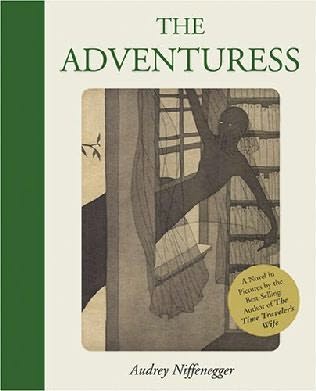
This Is Not a Graphic Novel: The Adventuress


The Adventuress (Harry N. Abrams), by Audrey Niffenegger

The greatest challenge facing comics as a medium today is not the dwindling readership, the explosion of variant covers or the fact that Iron Man’s been acting like such a dick lately. It’s linguistic. Even as comic books are being talked about more than ever—and in more different venues than ever before—we collectively have a hard time of even agreeing on what to call the damn things.

Up above, for example, I just said “comic books.” Should I have said “graphic novels” instead? No, probably not; the two are different words describing different types of publications, although it’s worth noting that some works are written as graphic novels but published as comic books (and then later republished as graphic novels), and some individual comic books are written as graphic novellas or short stories.

The best term is the one Scott McCloud arrived at in his seminal, must-be-read-by-everyone-who-plans-to-ever-open-their-mouth-in-public-about-comics tome Understanding Comics: “Sequential art.” But the term, accurate as it is, can sound so…awkward and self-serious in casual usage. Unless I’m writing a scholarly work or having a discussion about the definitions of the medium with an art professor, I prefer to just say “comic books.”

I got to thinking about the challenges of talking about comic books/graphic novels/sequential art the other day, when I picked up Audrey Niffenegger’s latest from the library, but the problems of talking about the medium were underscored in Wired News’s Tony Long’s fuddy duddy blog entry Gene Luen Yang’s American Born Chinese being nominated for a National Book Award, which predictably lead to push back from more enlightened individuals (Dirk Deppey’s October 30th Journalista blog has the best coverage and link assortment I’ve seen; go there to get up to speed).

Long’s opinion can be pretty much dismissed from the point where he says, “I have not read this particular ‘novel’…”, but his main criteria seems to be that comic books are not novels, although he expresses this opinion pretty ridiculously, “This is simply to say that, as literature, the comic book does not deserve equal status with real novels, or short stories. It's apples and oranges.

“If you've ever tried writing a real novel, you'll know where I'm coming from. To do it, and especially to do it well enough to be nominated for this award…is exceedingly difficult.”

I have written a real novel (a terrible, unpublished one) and it was difficult, but nowhere near as difficult as writing, illustrating and lettering a graphic novel (which I’ve also tried and, coincidentally, ended up with terrible, unpublished results). To do the former, you need to be a master of one skill set; to do the latter solo, as Yang did with American Born Chinese, you need to be a master of at least two, maybe four (Yang’s book is in color, another step in the comic book-making process, and it looks hand-lettered, but even computer-lettering is a skill great novelists don’t need to master).

Of the response’s to Long’s opinion, Neil Gaiman (who won a short story prize for a single-issue of his comic book Sandman…a graphic short story? A chapter of a graphic novel?…fifteen years ago) had the most humorous, “[I]t seems a rather silly and antiquated argument, like hearing someone complain that women have the vote or that be-bop music and crooners are turning up in the pop charts.”

It was in reading the others though that the problem of defining the medium comes up. The Slave Labor Graphics live journal makes some good points, but what threw me was this: “Is it bound and does it use sequential art to tell a story? Then it's a graphic novel.” What does this say about comic books that aren’t bound? Did Sandman only become a graphic novel once it was collected into a trade? Can online comics never be considered “graphic novels?”

This is all a really, really long introduction to a new feature here at EDILW, where we’ll be looking at books that aren’t graphic novels or comic books or McCloud-ian sequential art, but are nevertheless pretty damn close.

First up is the Niffenegger book I mentioned earlier. She’s best known as the author of The Time Traveler’s Wife, wonderful, clever and pretty damn heart-breaking prose novel I’d recommend to anyone who likes reading books without panels, which I occasionally do when I can’t find a graphic novel. The titular character of the book is an artist who works in the medium of paper. You may not be surprised to learn, Niffenegger is herself.

In 2005 she released The Three Incestuous Sisters, “an illustrated novel” (no really; it was a story book), in which she drew full-size, colored pictures and inserted brief lines of text. It wasn’t really an illustrated novel at all. It wasn’t a novel of any kind, but a story book or picture book, of the sort you’d find in the children’s section of your library, but it wasn’t for kids. It was beautifully drawn and designed, and it flowed with a sort of dream logic; a touch of magical realism, a touch of matter-of-fact fairy tale.

Her latest is The Adventuress, a book whose title and image of a masked woman sliding out of a window may stir the hearts of superhero fans. This one, the sticker on the cover of my local library’s copy tells me, is “A novel in pictures.”
This is a perplexing thing to call a book of any kind, but particularly this book. “An illustrated novel” is a term that makes sense; it’s a novel that’s been illustrated, like Alice’s Adventures in Wonderland or C.S. Lewis’ Narnia books; hell, the version of Pride and Prejudice I read was illustrated. But what’s a “novel in pictures?" Isn’t that just another way of saying a “graphic novel?” Speaking strictly linguistically, I’d say yes.

But despite being told in both pictures and words, despite the fact that it fits loosely into the McCloud-ian (how many times do I have to write that word before it becomes a real one, I wonder?) definition of “sequential art,” and despite the fact that it’s bound, I don’t think The Adventuress truly qualifies as a graphic novel, nor a novel in pictures.

It’s definitely graphic and has pictures, but the “novel” bit seems to be overselling it. Much like Niffenegger’s Sisters book, it uses sparse sentences to describe the scenes drawn in the pictures, but here the prose element is even more sparse, with single words and colons serving as title cards of sorts for the action in the pictures. I doubt there are any more than 500 words to the whole story, and it lacks many of the elements we usually associate with the modern novel; it reads instead like “a poem in pictures.”

The narrative is rather random, and contains another magical realism plot line. If there was a point to it—that is, if the book was about something—I failed to notice it.

That’s not to say it isn’t a great book, of course, it’s just that it’s ambitions and form don’t seem to overlap with that of a novel of any kind, let alone a “graphic novel” or “novel in pictures” at all.

Our heroine is a woman with short black hair, a long skirt, long glove and no shirt covering her bare breasts. She was created by an alchemist, carried off and married to a baron, burns down his house, goes to prison, makes a cocoon, turns into a moth, gets captured by Napolean, falls in love with him, gives birth to a cat, and so on.

Niffenegger’s sense of character design has a primitive feel to it, one that’s covered up by her command of color and framing of each scene. She also exploits the medium of drawing to great effect, creating images of her heroine’s spirit by simply not coloring in the drawing of her, for example, or giving the illusion of movement or change by drawing multiple arms coming from the same elbow.

It’s a really remarkable-looking book, and one I’d highly recommend readers look for at their local libraries (or read for free at a nearby big box book retailer), if you can’t afford the $27.95 for a five-to-ten minute read. Yes, it’s a remarkable book. It’s a gorgeous picture book, it’s a well-designed story book. It’ s a poem in pictures, a narrative image collection, a bound gallery show.

But it is not a graphic novel.