Showing posts with label kanigher. Show all posts
Monday, March 07, 2022
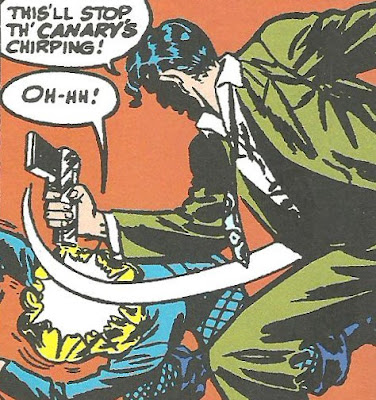
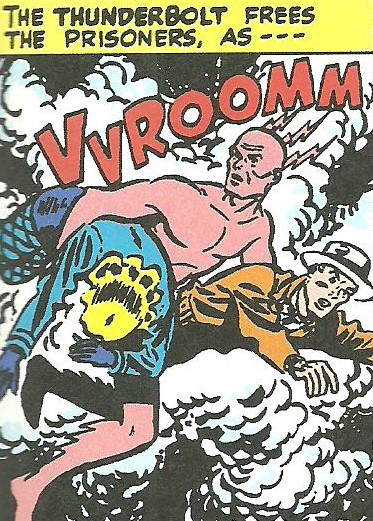
Black Canary apparently spent the majority of the Golden Age concussed.
Sunday, October 24, 2021
The gritty realism of Golden Age Black Canary stories
I've been reading the trade paperback collection Black Canary: Bird of Prey, which collects the original Black Canary comics, from 1947-1949, and then jumping ahead to the late '60s and early '70s for some more modern Black Canary tales.
She began her fictional life as a supporting character in the Johnny Thunder strip in Flash Comics, and so in three of her first five appearances she and Johnny find themselves falling from great heights—dropped out of a helicopter, blown sky high in an explosion, tied to giant firecracker rockets—only to be saved at the last minute by Johnny's Thunderbolt.
The sixth story in the collection is Canary's first solo feature, sans Johnny Thunder, and I imagined it would be a much more realistic crime feature. After all, there wouldn't be a magical wish-granting sentient thunderbolt to save her from her falls, right?
Black Canary still seems to find herself in the same sorts of predicaments though. In her second solo feature she and her companion are thrown off the top of a building by a rotating dance floor and seem to be plummeting to their deaths. How can the Canary get out of this one without the Thunderbolt?!
Oh, Black Canary has an oath, huh? I never knew that. You hear about Green Lantern's oath all the time, but no one ever mentions Black Canary's.Oh come on now.
Who knew?
Monday, October 20, 2014
You know who would like Wonder Woman's new origin story? Wertham.
![]() |
| Diana has two mommies?! |
In this section of the book, Hanley spends some time discussing Fredric Wertham's crusade against comics, the detrimental effects it had on the comic book industry (and, perhaps more importantly, the comic book medium) and how DC's post-congressional hearings superhero comics line conformed to the Comics Code Authority.
Wonder Woman, like Superman and Batman and Robin, were among the few superheroes specifically singled out by Wertham in his influential-at-the-time (and now much-ridiculed) Seduction of the Innocent, in which Wertham referred to Wonder Woman as the "lesbian counterpart" to Batman's barely-coded homosexual ideal. While Wertham's objection to the character as a sort of insidious recruiting poster for lesbianism—Wertham, like too many people of his day, thought homosexuality was in and of itself an unnatural and unhealthy thing—it turns out another thing he objected to was her origin story.
Her original origin story was told in 1941's All Star Comics #8, and repeated and refined elsewhere, as in the H.G. Peter-drawn panel from Wonder Woman #1 at the top of this post. It was this version, the only one the then still-young character had, that Wertham objected to. It went like this: Centuries ago, after their encounter with all-male hero Hercules during his famous twelve labors, Queen Hippolyte and her Amazons were led by the goddess Aphrodite to a hidden island, where they would be free of the violent, fallen world of men...and free to build their own advanced society and science. There, Athena taught Hippolyte the art of sculpting, and she made a little girl out of clay. Her patron goddess Aphrodite brought the little statue to life, and she was named after another Greek goddess Diana. The magically born girl would of course grow up to be the princess of the Amazons and, ultimately, Wonder Woman.
Writes Hanley:
Furthermore, Wertham decried the fact that "Wonder Woman is not the natural daughter of a natural mother, nor was she born like Athena from the head of Zeus." In 1954, the Golden Age Wonder Woman origin story still stood, and she was made of clay and brought to life by the gods. Her lack of a "natural" mother or father placed her further outside the maternal, familial norms than her fellow female heroes and made her the archetype of Wertham's narrow-minded deduction.Wertham would therefor probably prefer the current origin story. While it has been revised before, including by Kanigher himself (although, somewhat amusingly, Hanley points out that Kanighter has no memory of altering Marston's original origin story, despite doing so rather drastically), the current version concocted by Brian Azzarello as part of 2011's "New 52" reboot gives Wonder Woman a much more "natural" origin.
In Azzarello's version, which is apparently going to be the one used in Wonder Woman's feature film debut, Wonder Woman was conceived of a sexual union between her mother Hipplyte and her father Zeus, king of the Olympian gods.
![]() |
| You just don't see the point of conception in too many superhero origin stories, do you? |
The whole molded-from-clay thing was, in this new version, a pretty story her mother sold her to keep the truth about her demi-god status and familial relationship with the petty, bickering, often-at-war-with-one-another Olympians from her.
I suppose it would be petty and reactionary to blanketly state, "If Wertham would have liked it, then it's probably a bad idea" as some sort of rule for comic book-making, even when it came to Wonder Woman, the character he seemed to have the most trouble with for the least substantiated reasoning. But I'd be quite okay with comic book-makers having a poster on their office walls saying something like, "If Wertham would have liked it, let's give it a little more thought, just to be safe, shall we?"
Granted, much of Azzarello's soon-to-conclude run on the book has hinged on Wonder Woman being an Olympian, but his change in origin never sat well with me (the other bits of Wonder Woman's back-story he changed, like those concerning the Amazons kidnapping, mating with and then murdering sailors and then selling their male offspring for weapons sat worse still). That is, for the most part, because of how radical a change it was from Marston's conception of the character, which, unlike so many other superheroes, seems to get more and more diluted and generic the more writers work on her over the decades, rather than more and more complex and compelling. (For example, it's hard to find a Batman story that isn't at least as interesting as his first, Golden Age adventures, whereas it's damn near impossible to find a Wonder Woman comic as compelling as those Marston and Peter first crafted).
Labels:
azzarello,
h.g. peter,
kanigher,
tim hanley,
wertham,
william moulton marston,
wonder woman
Tuesday, August 26, 2008
The other other wonder dog
In tomorrow’s Teen Titans #62, writer Sean McKeever and artist Eddy Barrows will be introducing Wonderdog into mainstream DCU continuity. (You can read five pages of the issue, during which Wonderdog appears and gets his name and cape, here).
This Wonderdog is, of course, the one from the early ‘70s iteration of Super Friends, the green-caped anthropomorphic dog who hung out with his fellow “junior Super Friends” Wendy and Marvin (whom Geoff Johns added to the Teen Titans line-up after the “One Year Later” jump.)
When McKeever and Teen Titans editor/DC muckety-muck Dan DiDio first started teasing about a wonder dog joining the team, I was initially worried they might have been talking about the DC Universe’s greatest hero, Rex the Wonder Dog, who had previously been hanging out with teenage hero Hero in the pages of Superboy and The Ravers, and Hero subsequently joined a Titans West team that never appeared after their origin story, which Johns co-wrote. So you see, Rex is practically a member already.
(Well, “worried” is probably too strong a word, but I really rather like Rex the Wonder Dog, and would prefer to see him stay in limbo for now rather than suffer the indignities of having to hang around Wendy while she’s dressed like this, or be forced by Clock King II to fight to the death against Ace the Bat-hound in a prelude to Final Crisis or any of the other horrible things that could befall such a character in one of DC's team books).
So last week when I was reading through The Golden Age of DC Comics: 365 Days by Les Daniels, Chip Kidd and Geoff Spear (i.e. That Book I Keep Posting Scans From), I was surprised—no, shocked—to find that there was apparently another wonder dog in DC’s character catalogue, and this original DC wonder dog was actually the pet of one of its Golden Age superheroes, Green Lantern Alan Scott.
Ladies and gentleman, are you familiar with Streak the Wonder Dog?
(Above: Page from 1948's All-American Comics #99; scan lifted from Sleestak)
Debuting in the late ‘40s as the superhero slump was beginning, Streak was the creation of Robert Kanigher, and was introduced in the pages of Green Lantern as GL’s dog.
Here’s the cover of 1948’s Green Lantern #30, which featured “The Saga of Streak”:
(I’m not sure who the curvy dame on the other side of Scott is, but I bet she helped sell just as many issues as the dog trying to deposit his bone at the bank did).
Four issues later, Streak is back on the cover, and what’s this? Green Lantern is not:

Streak also got the cover to himself on 1949’s Green Lantern #36 and #38, the very last issue of this volume of the comic.


Oh man, poor Alan Scott. Hal Jordan fans might have thought they had it bad in the '90s when their Green Lantern lost his book to a brand-new young upstart character like Kyle Rayner, but at least he didn't lose the book to his dog.
Now, if that last cover, featuring a German shepherd perched atop a car full of escaping crooks, reminds you of the sort of thing Rex the Wonder Dog might have done in one of his adventures, there’s probably a good reason for that. According to a 2006 installment of Comic Book Urban Legends, Streak stories continued in Sensation Comics for a while, until Kanigher redeveloped the crime-fighting canine wonder dog concept and launched The Adventures of Rex The Wonder Dog. So does that mean Streak and Rex are related? Has Roy Thomas written a story about this?
Here are two interior images of Streak, culled from The Golden Age of DC Comics. First, despite being leashed and tied up, Alan Scott’s dog wins again, convincing Alan Scott’s secretary to stay on the train they're riding on:

And here’s Streak thinking human thoughts:

All of the above images, by the way, are drawn by Alex Toth. No wonder Streak the Wonder Dog look so wonderful...
This Wonderdog is, of course, the one from the early ‘70s iteration of Super Friends, the green-caped anthropomorphic dog who hung out with his fellow “junior Super Friends” Wendy and Marvin (whom Geoff Johns added to the Teen Titans line-up after the “One Year Later” jump.)
When McKeever and Teen Titans editor/DC muckety-muck Dan DiDio first started teasing about a wonder dog joining the team, I was initially worried they might have been talking about the DC Universe’s greatest hero, Rex the Wonder Dog, who had previously been hanging out with teenage hero Hero in the pages of Superboy and The Ravers, and Hero subsequently joined a Titans West team that never appeared after their origin story, which Johns co-wrote. So you see, Rex is practically a member already.
(Well, “worried” is probably too strong a word, but I really rather like Rex the Wonder Dog, and would prefer to see him stay in limbo for now rather than suffer the indignities of having to hang around Wendy while she’s dressed like this, or be forced by Clock King II to fight to the death against Ace the Bat-hound in a prelude to Final Crisis or any of the other horrible things that could befall such a character in one of DC's team books).
So last week when I was reading through The Golden Age of DC Comics: 365 Days by Les Daniels, Chip Kidd and Geoff Spear (i.e. That Book I Keep Posting Scans From), I was surprised—no, shocked—to find that there was apparently another wonder dog in DC’s character catalogue, and this original DC wonder dog was actually the pet of one of its Golden Age superheroes, Green Lantern Alan Scott.
Ladies and gentleman, are you familiar with Streak the Wonder Dog?
(Above: Page from 1948's All-American Comics #99; scan lifted from Sleestak)Debuting in the late ‘40s as the superhero slump was beginning, Streak was the creation of Robert Kanigher, and was introduced in the pages of Green Lantern as GL’s dog.
Here’s the cover of 1948’s Green Lantern #30, which featured “The Saga of Streak”:
(I’m not sure who the curvy dame on the other side of Scott is, but I bet she helped sell just as many issues as the dog trying to deposit his bone at the bank did).Four issues later, Streak is back on the cover, and what’s this? Green Lantern is not:

Streak also got the cover to himself on 1949’s Green Lantern #36 and #38, the very last issue of this volume of the comic.


Oh man, poor Alan Scott. Hal Jordan fans might have thought they had it bad in the '90s when their Green Lantern lost his book to a brand-new young upstart character like Kyle Rayner, but at least he didn't lose the book to his dog.
Now, if that last cover, featuring a German shepherd perched atop a car full of escaping crooks, reminds you of the sort of thing Rex the Wonder Dog might have done in one of his adventures, there’s probably a good reason for that. According to a 2006 installment of Comic Book Urban Legends, Streak stories continued in Sensation Comics for a while, until Kanigher redeveloped the crime-fighting canine wonder dog concept and launched The Adventures of Rex The Wonder Dog. So does that mean Streak and Rex are related? Has Roy Thomas written a story about this?
Here are two interior images of Streak, culled from The Golden Age of DC Comics. First, despite being leashed and tied up, Alan Scott’s dog wins again, convincing Alan Scott’s secretary to stay on the train they're riding on:

And here’s Streak thinking human thoughts:

All of the above images, by the way, are drawn by Alex Toth. No wonder Streak the Wonder Dog look so wonderful...
Saturday, April 26, 2008
Garth Ennis did not write this scene
(despite the fact that he has written multiple scenes of people being killed by falling into airplane propellers.)


This fight to the death between Hans Von Hammer and The Bull was written instead by Robert Kanigher, and constitutes but one of the Enemy Ace's many acts of black-and-white bad-assery available in Showcase Presents: Enemy Ace Vol. 1.


This fight to the death between Hans Von Hammer and The Bull was written instead by Robert Kanigher, and constitutes but one of the Enemy Ace's many acts of black-and-white bad-assery available in Showcase Presents: Enemy Ace Vol. 1.
Monday, April 21, 2008
The Killer Skies claim their cutest victim
German air ace Baron Hans von Hammer, nicknamed “The Hammer of Hell,” was one of the most accomplished pilots of World War I. In his custom crimson tri-winged Fokker Dr.I, von Hammer was virtually unstoppable in the air, a human killing machine responsible for over 100 confirmed kills in a four-year period.
On the ground and outside of his cockpit, however, Von Hammer’s reputation haunted him. The pilots that served under him in his Jagdstaffel kept their distance, whispering about their emotion-less leader from afar. The pride of his personal valet and his people had in his exploits irritated him. The women who would dare to get close to him would become overcome with fear, chilled by the very touch of his lips.
His only friend in the world was a large black wolf that prowled the Black Forest at night, another lonely born killer.
By all accounts, he was an extremely dark, cold, brooding man.
What made him like this? Was it the fact that he led so many young men to their deaths, yet he himself always seemed to survive? Was it the number of noble, skilled pilots he himself gunned down, simply because they happened to fly under another flag? Was it simply the deleterious effect of war on the noble soul of a noble man?
Perhaps. Or perhaps it’s because in the middle of this brutal war he had to bury his puppy.

It happened in Star Spangled War Stories #148, in a story entitled “Luck is a Puppy Named Schatzi!” by the original Enemy Ace creative team of Bob Kanigher and Joe Kubert (Conveniently collected in Showcase Presents Enemy Ace Vol. 1, one of the best collections in the series so far).
As you can see by the cover image, this is a seriously dramatic story. Not only is our dark, tragic, Byronic protagonist getting all shot to hell high above the earth in a fragile, upside down airplane, but he’s dropped his puppy! His injured puppy! Jesus!
The tale begins on the Jagdstaffel of Rittmeister von Hammer, where a curious, hungry stray puppy is curiously inspecting the parked airplanes. Suddenly, out of the sky swoops Von Hammer and his pilots, coming in for a landing.

The puppy runs for cover, but, alas, not fast enough. Yes, this is a story which begins with a puppy being run over. And things are only going to get worse from there.
Von Hammer doesn’t spot the puppy until its too late, and dives out of his plane to find the little animal beneath one of his wheels. He’s overjoyed to find that, though wounded, it lives.

This is only the third page of this story, but it’s the 317th page of the Showcase Presents collection. And I’m pretty sure it’s the first time Von Hammer has cracked a smile in the whole thing.
The other pilots are just as surprised to see Von Hammer happy:

"Schatzi," by the way, is German for sweetie, sweetheart or honey which, obviously, doesn't sound like the sort of name one would expect the Hammer of Hell to come up with for a pet.

He takes Schatzi to his quarters, bandages his leg, and even takes him to bed with him.

The following morning, he addresses his men on the runway, informing them that Schatzi will be accompanying them on their mission to take on a battleship off the coast of Cuxhaven. They take on a trio of British Sopwith sea-planes, a battle which costs him his young pilot Kurt, who was only on his second patrol, then buzzes a battleship, luring the British planes into smashing into their own ship and blowing it to blighty.
Schatzi tries his best to be as brave and determined-looking as his new master. I love these panels, which are exactly like the scores of other panels of the grim Enemy Ace that Kubert has filled these stories with, except, of course, the presence of a puppy in each of them.


After touching down, the soldiers rush to congratulate him on his victory, but Von Hammer cuts them short as usual, reminding them of the cost of such a victory…

…before grinningly widely and leading his new little friend off to meet his only other friend.

Despite what Von Hammer says here about them being three of a kind, I’m not so sure I buy it.

It’s not just solitude that unites the wolf and the Enemy Ace, after all. It’s also the fact that they’re born killers. Still, I love this panel of the trio striding side-by-side through the forest (For some reason, I hear this song in my head when I look at that panel).
Schatzi, all tuckered out from his long day of air-battles and wolf-meeting, falls asleep in Von Hammer’s arms, and the two killing-machines part ways.

But back at the Jagdstaffel field, an urgent message has arrived, ordering Von Hammer and his pilots to provide air support for the German infantry driving into France.
The baron tucks his little friend into the collar of his coat and flies off into the rain, telling him there’s no crying in World War I.

At this point, you can kind of see that Schatzi is beginning to realize what he’s gotten himself into. I mean, look at that “oh shit” look on his face in that last panel there.
As soon as the storm clouds part, a storm of lead replaces it, driven on by British fighters.
Schatzi finally proves himself a good co-pilot, warning Von Hammer of an enemy plane just in time to save his life.

And then it happens:

Nnnneeeeeiiiiiiiiiiiiinnnnnnnn!!!!!!!!
Can even the Enemy Ace pull off the aerial acrobatics necessary to somersault below the plunging pup and catch him?
No, no he can’t. The cute little puppy totally falls to his death.
All Von Hammer can do is freak out for a few panels

and then, then, then... if you thought fighting against Enemy Ace on a normal day was scary, you should see him after he loses a puppy. He-- well, let's let Kanigher take it from here...
“Like a madman, the Hammer of Hell tears into battle—wreaking a terrible havoc…
“He is everywhere at once… Sending his spandaus’ bullets crashing into any object caught in his target-sights…
“Four…five…SIX planes wrapped in flames fall victim to his murderous, withering fire…
“Like a blazing-red fireball his Fokker streaks across the sky…leaving a trail of billowing smoke and ravaging flame…”
The carnage ends only when the baron runs out of ammunition, and the few surviving combatants limp back to their bases. But not Von Hammer.
Back at his Jagdstaffel, his men wonder wehre he has gone. One says that “he flew like an Avenging Angel of DEATH!” and then landed “amidst the dead below! It—it was horrible! Like something out of Dante’s Inferno! Perhaps… he landed to confirm kills!”
But no, he has landed in the graveyard of No Man’s Land, picking through the dead until he can find the body of Schatzi, and gives his fallen friend a true pilot’s burial.

The skies are truly the killers of us all, and, in war, no one is safe! Not even puppies!
On the ground and outside of his cockpit, however, Von Hammer’s reputation haunted him. The pilots that served under him in his Jagdstaffel kept their distance, whispering about their emotion-less leader from afar. The pride of his personal valet and his people had in his exploits irritated him. The women who would dare to get close to him would become overcome with fear, chilled by the very touch of his lips.
His only friend in the world was a large black wolf that prowled the Black Forest at night, another lonely born killer.
By all accounts, he was an extremely dark, cold, brooding man.
What made him like this? Was it the fact that he led so many young men to their deaths, yet he himself always seemed to survive? Was it the number of noble, skilled pilots he himself gunned down, simply because they happened to fly under another flag? Was it simply the deleterious effect of war on the noble soul of a noble man?
Perhaps. Or perhaps it’s because in the middle of this brutal war he had to bury his puppy.

It happened in Star Spangled War Stories #148, in a story entitled “Luck is a Puppy Named Schatzi!” by the original Enemy Ace creative team of Bob Kanigher and Joe Kubert (Conveniently collected in Showcase Presents Enemy Ace Vol. 1, one of the best collections in the series so far).
As you can see by the cover image, this is a seriously dramatic story. Not only is our dark, tragic, Byronic protagonist getting all shot to hell high above the earth in a fragile, upside down airplane, but he’s dropped his puppy! His injured puppy! Jesus!
The tale begins on the Jagdstaffel of Rittmeister von Hammer, where a curious, hungry stray puppy is curiously inspecting the parked airplanes. Suddenly, out of the sky swoops Von Hammer and his pilots, coming in for a landing.

The puppy runs for cover, but, alas, not fast enough. Yes, this is a story which begins with a puppy being run over. And things are only going to get worse from there.
Von Hammer doesn’t spot the puppy until its too late, and dives out of his plane to find the little animal beneath one of his wheels. He’s overjoyed to find that, though wounded, it lives.

This is only the third page of this story, but it’s the 317th page of the Showcase Presents collection. And I’m pretty sure it’s the first time Von Hammer has cracked a smile in the whole thing.
The other pilots are just as surprised to see Von Hammer happy:

"Schatzi," by the way, is German for sweetie, sweetheart or honey which, obviously, doesn't sound like the sort of name one would expect the Hammer of Hell to come up with for a pet.

He takes Schatzi to his quarters, bandages his leg, and even takes him to bed with him.

The following morning, he addresses his men on the runway, informing them that Schatzi will be accompanying them on their mission to take on a battleship off the coast of Cuxhaven. They take on a trio of British Sopwith sea-planes, a battle which costs him his young pilot Kurt, who was only on his second patrol, then buzzes a battleship, luring the British planes into smashing into their own ship and blowing it to blighty.
Schatzi tries his best to be as brave and determined-looking as his new master. I love these panels, which are exactly like the scores of other panels of the grim Enemy Ace that Kubert has filled these stories with, except, of course, the presence of a puppy in each of them.


After touching down, the soldiers rush to congratulate him on his victory, but Von Hammer cuts them short as usual, reminding them of the cost of such a victory…

…before grinningly widely and leading his new little friend off to meet his only other friend.

Despite what Von Hammer says here about them being three of a kind, I’m not so sure I buy it.

It’s not just solitude that unites the wolf and the Enemy Ace, after all. It’s also the fact that they’re born killers. Still, I love this panel of the trio striding side-by-side through the forest (For some reason, I hear this song in my head when I look at that panel).
Schatzi, all tuckered out from his long day of air-battles and wolf-meeting, falls asleep in Von Hammer’s arms, and the two killing-machines part ways.

But back at the Jagdstaffel field, an urgent message has arrived, ordering Von Hammer and his pilots to provide air support for the German infantry driving into France.
The baron tucks his little friend into the collar of his coat and flies off into the rain, telling him there’s no crying in World War I.

At this point, you can kind of see that Schatzi is beginning to realize what he’s gotten himself into. I mean, look at that “oh shit” look on his face in that last panel there.
As soon as the storm clouds part, a storm of lead replaces it, driven on by British fighters.
Schatzi finally proves himself a good co-pilot, warning Von Hammer of an enemy plane just in time to save his life.

And then it happens:

Nnnneeeeeiiiiiiiiiiiiinnnnnnnn!!!!!!!!
Can even the Enemy Ace pull off the aerial acrobatics necessary to somersault below the plunging pup and catch him?
No, no he can’t. The cute little puppy totally falls to his death.
All Von Hammer can do is freak out for a few panels

and then, then, then... if you thought fighting against Enemy Ace on a normal day was scary, you should see him after he loses a puppy. He-- well, let's let Kanigher take it from here...
“Like a madman, the Hammer of Hell tears into battle—wreaking a terrible havoc…
“He is everywhere at once… Sending his spandaus’ bullets crashing into any object caught in his target-sights…
“Four…five…SIX planes wrapped in flames fall victim to his murderous, withering fire…
“Like a blazing-red fireball his Fokker streaks across the sky…leaving a trail of billowing smoke and ravaging flame…”
The carnage ends only when the baron runs out of ammunition, and the few surviving combatants limp back to their bases. But not Von Hammer.
Back at his Jagdstaffel, his men wonder wehre he has gone. One says that “he flew like an Avenging Angel of DEATH!” and then landed “amidst the dead below! It—it was horrible! Like something out of Dante’s Inferno! Perhaps… he landed to confirm kills!”
But no, he has landed in the graveyard of No Man’s Land, picking through the dead until he can find the body of Schatzi, and gives his fallen friend a true pilot’s burial.

The skies are truly the killers of us all, and, in war, no one is safe! Not even puppies!
Subscribe to:
Posts (Atom)