Saturday, November 11, 2006

Weekly Haul: November 8th


52 #27 (DC Comics) This week’s issue is a little disappointing, mostly because so many good ideas get poorly executed, more bad writing than usual seeps through the quality filters and some little mistakes make it frustratingly hard to lose yourself in the fantasy of the story. Plot-wise, the new dynamic duo of Ralph Dibny and the helm of Fate visit the host-less Spectre Force, and Dibny tries to cut a deal with the green panties and booties wearing personification of the wrath of God—Dibny will act as his host to wreak vengeance upon Jean Loring for murdering Sue Dibny, and, in return, S.F. will resurrect Sue. It sounds win-win, but Ralph just can’t go through with it. The Question and Richard Dragon train Montoya in Nanda Parbat, and we finally find out what they’re training her for—Question’s got lung cancer, and he’s grooming Montoya to be his successor (groan). The most intriguing bit is the time-travel sub-plot, in which Waverider (who’s energy wave hair looks poorly permed for some reason), is confronted by first the Time Commander and then Evil Skeets .

Shawn Moll pencils the whole shebang, and I know Moll’s a competent artist from his past work, but not all of the five inkers who collaborate with him seem to complement his style equally well. It’s hard to believe that with four writers as skilled as the Four Horsemen of 52, not one of them wouldn’t have stepped up and said, “You know, this thing Ralph says on page one, ‘When it comes to learning about the dark side of magic, there’s only one teacher left. And I understand his finals are a bitch.’ That’s kind of stupid, isn’t it?” Also, “You homicidal bitch,” doesn’t much sound like something either the Spectre Force or Ralph Dibny would say, does it?

But, as for the nitpicks, the toughest part to get over was the suspension of the “rules” of characters Eclipso and the Spectre. According to Eclispo: The Darkness Within and the Eclipso monthly, and even the rather recent Eclipso issues of JSA, the dark demigod possesses human bodies and essentially drives them like cars, retaining his own personality. Sunlight drives him from his host. Yet here’s the Eclipsed Jean Loring, in orbit around the sun, and she’s still Eclipsed. Exposure to sunlight should drive the big E. out, and then she’d explode in the vacuum of space, right? Similarly, the Spectre Force (apparently, we’re meant to have read his miniseries to know why he’s no longer bonded to Crispus Allen, as he was in the pages of Infinite Crisis) says it can’t exact vengeance without a host, and yet Day of Vengeance and the early chapters of IC revolved around it doing just that.

Letterer Pat Brosseau and the writers make the scene involving these characters all the more confusing with the lettering. The Spectre Force speaks in its all green bubble, but when it merges with Ralph, Ralph’s bubbles stay all white, and his voice seems to be Ralph’s, rather than that of a Spectre/Ralph fusion (“Not by a long shot, you psycho.”). Jean Loring seems half-Eclipsed (wearing her costume, but without the dark patch on her face), and when she awakes and gets the dark patch back, her voice lacks the purple-rimmed Eclipso dialogue bubble, and her voice seems to be Jean’s rather than Eclipso’s. Ralph confronting his wife’s murderer should be a powerful moment in his character arc, but it ends up being short-changed in execution.

And speaking of poor execution, the Howard Chaykin drawn Black Canary origin is an incredibly weak one, visually and narratively, and doesn’t tell us anything about what Infinite Crisis has changed about Black Canary’s continuity; since Wonder Woman replaced her as a founding member of the JLA, Canary’s continuity has been a gigantic question mark since IC wrapped, and this story does nothing to fix that.

Batman #658 (DC) Grant Morrison and Andy Kubert wrap up their first story arc on Batman, and all four parts taken together make for a hell of a ride. This issue is somewhat uneventful compared to the first three, as Talia’s chess game involving Damian, the ninja Man-Bat army and the Rock of Gibraltar reaches its conclusion with a rather pat ending. Morrison gets the characterization of Batman and Alfred perfect, and Kubert’s art perfectly blends the styles of Norm Breyfogle and Jim Lee to give us the new definitive version of the characters. Plus, how cool is the Batrocket?

Civil War: Thunderbolts: Swimming With Sharks (Marvel) Like the recent reprint of the Amazing Spider-Man issues that tied into the “Civil War” storyline, this big, fat collection of Thunderbolts gives readers a can’t-miss bargain opportunity to catch up on an aspect of the story they missed if they weren’t already reading T-Bolts (God knows I wasn’t). For just $4.99, you get nine bucks worth of comics. The three issues contained within follow Baron Helmut Zemo and his team of reformed villains looking for redemption as they’re approached by Tony Stark and asked to hunt down villains. Zemo’s team happily complies, as it allows them to covertly build their own personal supervillain army without any interference, with every lame-o villain they capture becoming part of their team. I was a little lost on where the Grandmaster plotline was going, but writer Fabian Nicieza makes Helmut Zemo an intriguing character, and dusts off all sorts of Z-List Marvel villains, making this something of a Marvel version of Villains United. It’s also a plain old-fashioned superhero funny book, the likes of which is very welcome during these days of constant deconstruction of the genre. As the Amazing Spider-Man reprint did, this book has successfully converted me into a regular reader. Now, here’s hoping Wolverine’s recent “Civil War” arc gets similar treatment in the weeks ahead.

Civil War: Young Avengers & Runaways #4 (Marvel) I was totally jazzed about this miniseries as soon as it was announced, as I was hoping Marvel’s two top teen teams would meet-up and/or square off pretty much since Young Avengers launched. And for fans of either team, I think the series can be declared a success. As a “Civil War” tie-in, however, it’s next to irrelevant—if anyone picked this up simply because they wanted to follow the line-wide superhero crossover, they’ll probably be quite disappointed to learn that all it does is tell us which side the Runaways choose in the conflict (If you haven’t read it, I’ll save you $12: The decide to stay out of it). While writer Zeb Wells probably wasn’t the ideal candidate for the assignment (team creators Brian K. Vaughan and Allen Heinberg, who consulted, would have been the first and second choices), he does a fine job of giving us a good old fashioned Marvel-style fight, make-up and team-up story, even finding novel use for Grant Morrison’s Marvel Boy as a villain and still putting that particular toy right back where it was before he picked it up to play with. Stefano Caselli’s art is simply fantastic, and I look forward to seeing more of him on Marvel characters in the future. Wells only has one more barb to throw at the lame YA heroes this issue, but it’s a sharp one. Chase’s parting words to the new Vision: “Hey, don’t be so down, man. I mean if nothing else you have by far the coolest costume of anyone one your team…”

Dr. Strange: The Oath #2 (Marvel) And speaking of Vaughan, he’s firing on all cylinders with this Dr. Strange miniseries, by far the best Strange story I’ve read in…well, gee, I don’t know, forever, maybe? Don’t get me wrong, I love the good doctor’s recent adventures in titles like X-Statix Presents: Deadgirl and the various recent incarnations of The Defenders, but Vaughan and company manage to play him completely straight while still telling a humorous story, one that, remarkably, calls on both the medical and magical aspects of one of the more complicated and underappreciated characters in the Marvel stable. Marcos Martin’s pencil art is a wonder to behold, and the presence of a UPC label and title on the cover is simply a crime against aesthetics. Even the re-cap page, a modern Marvel institution I usually ignore, is exciting here, as the Eye Agamotto recaps the events of issue #1 for us. This issue contains what may be the line of the week: “By the hoary #%*-ing hosts!” Too inside a joke? Maybe, but for those of us on the inside, it works.

Eternals #5 (Marvel) Don’t ask me how the Minor Jack Kirby Creation + Neil Gaiman formula, the same formula that produced The Sandman, went wrong exactly, but it did, and it went wrong badly, even with John Romita Jr. on art. Gaiman’s not exactly an expert when it comes to straightforward superheroics, which this title has mostly been, and the result has been a plodding story about typical Kirby-esque deities-cum-superheroes who have forgotten that’s what they are, slowly awakening to their true natures. Gaiman manages some very nice dialogue, but that’s hardly enough to recommend a six-issue miniseries. I bought this issue simply because of the names of the creators; if I buy #6, I imagine it will be more because of my anal retentive completist tendencies than an honest desire to see how it ends. I’m long past caring at this point.

Green Lantern #14 (DC) One of the DCU’s most regularly delayed books makes an all too rare appearance on the shelves this week, and though Ivan Reis and Oclair Albert’s art is indeed gorgeous, I’m not sure if it was necessarily worth waiting for. Perhaps they could join writer Geoff Johns on an All-Star Green Lantern project, and DC could find someone literally quicker on the draw to take over penciling duties? The story is a dramatic and suspenseful one, with a ton of things going on, which makes the fact that I’ve forgotten so much of what came before over the months all the more frustrating. We revisit Hal Jordan and company’s time as P.O.W.s, see a prophetic nightmare involving Hal’s origin, witness the return of a minor character from the terrible “Black Reign” cross-over story and check in with the new Global Guardians, who arrive on the battlefield just as Jordan is being framed for killing a bunch of guys. The P.O.W. scenes made me feel rather uncomfortable, dealing as explicitly with torture as they do (this title has had a remarkably cavalier attitude toward torture that seems horribly out of place in a post-Abu Ghraib scandal period), and Johns illustrates why having a superhero serve in the military is a terrible idea.

At one point, Jordan picks up a gun and shoots a captor in the left side of the chest, presumably killing him. Yeah, he’s a soldier at war, but given the hard line his fellow Justice Leaguers (and his fellow Lanterns, as he later points out himself in the narration) take against killing, it doesn’t seem terribly appropriate. The greatest cognitive dissonance of the issue didn’t come from the killing though (I’ve long since accepted that Jordan is a jerk whom I have no respect for; that’s one of the reasons I enjoy the book, actually), but from hearing Jordan quoting Republican Senator John McCain. Confidential to Freedom Beast: Next time you head into snowy weather, you might want to at least pack a pair of pants.

JLA: Classified #29 (DC) Not that Green Lantern is the only DCU comic dealing with torture this week. Princess Diana, the world-famous superheroine and celebrity, is taken captive, yet her captors somehow don’t recognize her. Kyle Rayner is also taken captive, stripped and tortured. I continue to enjoy Kilian Plunkett and Tom Nguyen’s incredible art work, which makes the secret identities of the Justice Leaguers look as exciting as the characters would be if they were in their costumes using their powers, and writer Howard Chaykin’s politics and espionage fueled story, even if the continuity of the story makes it a complete impossibility, for the reasons discussed in reviews of previous issues. Oh wait, here’s a fresh continuity error: In the very first panel, President Jonathan Horne announces that, “This presidency will not make the same mistakes as pervious administrations…we will not go it alone in any international conflict without explicit U.N. backing.” Sounds like a dig against the Bush administration’s going to war in Iraq with just the Brits backing us in any meaningful way (I know, I know, I pulled a Kerry and forgot Poland), but there was no Bush administration in the DC Universe. Bush lost the 2000 election to third party candidate Lex Luthor, who was replaced by his VP Pete Ross and, in ’04, Horne was apparently elected.

The Last Christmas #5 (Image Comics) Damn, I already awarded the line of the week to Dr. Strange #2, didn’t I? I guess Santa’s “God damn you all—everyone!” as he machine guns down a pack of zombies will have to settle for runner-up. When it comes to Christmas-themed ultraviolence, however, this comic book is in a category of it’s own. If you missed out, a trade is planned in time for the gift-giving season, according to co-creator and co-writer Gerry Duggan.

Project: Romantic (AdHouse Books) On the heels of Project: Telstar and Project: Superior comes a romance anthology book. It may be simply because it’s fresher in my mind, but this seems to be the best of the three, and is seriously a must-read for comics fans. I’d have an easier time picking a least favorite than a favorite, as the good-to-bad ratio inherent in all anthologies leans so heavily toward good. I particularly enjoyed the choose-your-own-adventure story, the two stories about ghosts and robots, the one about the woman who’s fiancĂ©e turns into a bear, Joel Priddy’s stories of mad scientists in love and Josh Cotter’s hilarious animal stories. Word is this is the last of these anthologies from AdHouse, a fact which breaks my heart like no relationship gone sour ever could.

Superman #657 (DC) Normally I’m not a fan of the alternate reality/possible future stories cluttering up DCU titles (that’s what Elseworlds is for), but this one is so well drawn by Carlos Pacheco and Jesus Merino that I didn’t mind one bit. In eight years, planet earth in general (and Metropolis in particular) are in a world of trouble, thanks to Superman screwing up in a battle with someone by the name of Khyber. This is according to the time-traveling dickhead/sorcerer Arion, who tells Superman and his supporting cast about the ugly destiny they need to try and avoid, while dealing out insults (He calls Perry a “jowly sack of guts,” which might explain why the Daily Planet Editor-in-Chief was in such a gruff mood in Action Comics #844). The splash on pages two and three is nothing short of a masterpiece, and I thoroughly enjoyed the games of identifying the cameo-ing character that several big battle scenes provided. Some of Pacheco’s designs are so cool that I hope we haven’t seen the last of them, like that woman wearing the rhinoceros head on page 11.

Teen Titans (DC) The “Titans Around the World” story arc ends somewhat anticlimactically this issue (I guess I was expecting to meet some of those other “lost year” Titans revealed in the two-page spread of suspects a few issues back), as Bombshell accuses Rose Wilson of betraying the Titans and a bunch of fighting occurring, which leads to a new line-up for the team. No one leaves, and Raven, Miss Martian and the lamest Titan in all of Titan history join up. The best part? When Rose is planning on quitting the team, she starts packing her stuff, and we see an open duffle bag with nothing in it but knives, which she then tosses a pack of cigarettes into. Hope you weren’t planning on flying anywhere with that luggage, Rose.

November 9th's Meanwhile, in Las Vegas...


This week’s Las Vegas Weekly comics column features reviews of American Born Chinese (Why yes, I am the last comics commentator in America to weigh in on the Tony Long Wired piece) and DC/WildStorm’s Midnighter series—Garth Ennis' subtle usage of symbolism and all. You can read it here.

And he's humble, too


I was somewhat surprised by the word choice in the solicit for Secret War on Marvel.com.

Check it out:

"Starring Wolverine, Spider-Man, Daredevil, Captain America, Black Widow, Luke Cage and more! Brian Michael Bendis, the most popular and acclaimed writer in comics, reveals the darkest chapter in Marvel Universe history! When Nick Fury discovers a disturbing connection between many of Marvel’s deadliest villains, he assembles a ragtag team of the MU’s most misunderstood heroes for a secret mission to do what the U.S. government could never allow – eventually leading to a super-powered blowout between a who’s who of NYC heroes and mutants! Featuring the American debut of the stunning, fully painted work of Italian artist Gabriele Dell’Otto."

Anything strike you as a little odd about it? (Here’s a hint: Re-read that second sentence). Now I don’t begrudge whoever the hell wrote this particular solicit for making with a hard sell; it’s essentially ad copy, and an ad copy writer is expected to make the product seem as appealing as possible, but there’s a difference between exaggerating and crazy talk. Why not just say, “Brian Michael Bendis, the three-headed, winged man-monster with fingers made of pure gold.”

Or is Bendis really the “most popular and acclaimed writer in comics?”

I find that hard to believe. Certainly, Bendis is a good comics writer. Hell, he’s a great one, and a hard-working professional who has mastered several different genres. But he’s not “the most acclaimed writer in comics.”

The argument can be made that he’s the most popular, if one bases it simply on New Avengers's regular spot as the number one-selling book in the field, but it’s a qualified “most popular,” as it simply means he writes the best-selling book of that particular month.

But I don’t see how anyone could even make an argument that he’s the “most acclaimed,” as vague as that phrase is.

Ask anyone who the best comics writer is, and they’ll tell you it's Alan Moore. Maybe you’ll find a few people who will say Grant Morrison, Neil Gaiman, Harvey Pekar or Frank Miller, but more likely than not they’re only saying that because they know you expect them to say Alan Moore, and they want to stand out from the crowd. But Alan Moore is easily, pehraps even inarguaby, the most acclaimed writer in comics, just as he has been for decades.

But let’s look at it another way—who is it that’s doing the acclaiming, and where are they doing it at? Bendis is a talked-about writer, no doubt about that. There isn’t a superhero comic book-related website in the world that doesn’t discuss his work (it's a rare week where he doesn't come up in Best Shots column at Newsarama, for example), and I’d wager at least 75% of those discussions are positive ones, though love for Bendis is hardly universal.

But when was the last time you heard anyone in a mainstream non-comics publication or venue discuss Bendis’ work?

I honestly can’t remember the last time I did. Hearing him called the "most acclaimed writer in comics" sounds especially odd in the fall of 2006, after the entire English-speaking mediascape has devoted some form of positive coverage to Alan Moore these past few months due to the recent release his latest magnum opus Lost Girls, and relative newcomer Brian K. Vaughan’s script for Pride of Baghdad received similar coverage.

Marvel could easily get away with calling Bendis “one of the most popular and acclaimed writers in comics,” or perhaps “Marvel’s most popular and acclaimed writer,” but without some sort of qualifying statement, the statement crosses that thin line between ad-copy hype and total bullshit.

Elsewhere in the blogosphere


Gluttons for online comics criticism and commentary would do well to check out The Comic Glutton, a blog from a man who shares your appetites—Mr. Paul T. Semones. He does an excellent job keeping an eye on Marvel and DC’s recent advertising explosions, how late constantly late books actually are and two eyes on Hawkgirl’s hawk-bra.

I don’t know what I find more surprising about the hawk-bra discussion—that Hawkgirl has her logo on her bra, or that she even wears a bra, considering the way Howard Chaykin’s been drawing her breasts since he became the series regular artist (Oddly, you can see her nipples through her bra and top, but you can’t see them through just her bra. Must have something to do with the Thanagarian Nth metal underwire).

Saturday, November 04, 2006

What If Marvel Published the What If Specials I Really Want To Read?


Wednesday Marvel kicked off it’s 2006 round of What If? specials, which revisit recent hot storylines like Wolverine: Enemy of the State and X-Men: Deadly Genesis and explore how they might have gone down differently.

It’s not a bad idea. It’s certainly a marketable idea, and truer to the original intent of the What If…? comic book series than last year’s specials, which focused on characters in different settings, and thus more closely resembled DC’s Elseworlds, and all had rather bland titles, like What If: Thor, What If: Captain America, and so on.

I was a little disappointed in What If? Featuring The Avengers Disassembled, however, and it got me thinking about the problem of these sorts of non-continuity stories in general, how fans tend to hold them to a higher standard than they would “616” stories because, ultimately, they don’t “count,” seeming to boast an even greater level of unreality than the rest of Marvel’s equally fictional stories.

Thinking about alternate universe stories the Big Two, it seems like it’s a rare one that really succeeds on it’s own as a great story (The Dark Knight Returns and Watchmen spring most immediately to mind), and those aren’t the sorts of stories a publisher can plan to release (If they were, I’m sure DC and Marvel would be only too happy to keep publishing Watchmen-quality stories every week). The lesser alternate universe stories I’ve enjoyed usually contained an incredibly talented artist riffing on the classic mold of iconic characters, and pouring out admirable designs. For example, Paul Pope’s Batman: Year 100 was merely a mediocre story, but seeing Pope’s take on Batman, his costumes and his vehicles justified the experience for me.

It’s too early to judge the remaining four Marvel What If?s of 2006, of course, but based on this first one, they don’t seem like they’ll have really inspired takes, nor are the artists involved seemingly given free reign to radically redesign the territory they’re working.

So in the comic book reader’s version of fantasy football, I thought I’d offer my suggestions for What If? stories I’d rather read. It’s never too early to start planning for fall of 2007, Marvel editors. The criteria is simple: Here’s five What If? stories, all phrased in the form of a questions, as they should, with suggestions on who would make for the ideal creative team.

1.) What If Hawkeye Just, Like, Took His Quiver Off? This year’s What If? event returns to the scene of the crime against Avengers history and fandom that was Brian Michael Bendis’ “Avengers Disassembled” story. As a late-comer to the title (I actually didn’t even start reading it monthly until Bendis joined the creative team), I didn’t much mind any of the portrayals of the character in this story, and it didn’t occur to me how silly Hawkeye’s death really was until I heard someone else point out that he could have just took his quiver off before it exploded (Think about how many times you’ve seen a movie, TV show or comic where the hero jumps from a moving truck/tank/plane/motorcycle/pegasus* at the very last minute, rolling to safety as it explodes taking out an enemy base/fortification/truck/plane/spaceship).

Admittedly, Hawkeye simply surviving “Avengers Disassembled” isn’t all that interesting a story, but it would make for a neat hook to parody the New Avengers series to follow, as the loud-mouthed archer and long-time Avenger could act as the voice of the more persnickety Avengers fans in the face of the changes that would follow. (I see a sub-plot where Clint Barton feels strangely attracted to mysterious newcomer Ronin and fights against these strange new feelings—“What’s wrong with me? I’ve always thought I was all man, and yet there’s something about this brawny new guy that attracts me…”—only to be greatly relieved when it’s revealed Ronin is actually a hot chick wearing a padded man-suit for some reason.

Dan Slott would seem like an ideal writer for such a story, being Marvel’s go-to funny guy, although Defenders: Indefensible co-writers Keith Giffen and J.M. DeMatteis could certainly pen a funny superhero tale (they’ve already hilariously parodied Hawkeye’s last words in “I Can’t Believe It’s Not the Justice League”). But after reading Stan Lee Meets Dr. Strange #1, I think it’s clear that nobody parodies Bendis better than Bendis himself. As for art, let’s give it to Mark Bagley; he worked well with Bendis on that Stan Lee story (and a few hundred other stories).

2.) What If it Really Was Clint Barton Impersonating Daredevil? When Ed Brubaker and Michael Lark took over as the creative team on Daredevil, one of their earliest stories dealt with Daredevil running around Hell’s Kitchen going about his normal Daredevil-ing, while Matt Murdock was stuck in a jail cell, and clearly wasn’t in the suit. Who was in the suit became something of a mystery, a mystery Marvel accidentally spoiled when the cat was let out of the bag in another book early. To cover—and use the mistake to pump up the mystery further—Marvel released more names of who it actually was in the red pajamas.

One popular candidate was Clint “Hawkeye” Barton, a name Newsarama.com posters had been throwing around for weeks anyway. Well, what if it was Barton, asked to take over for Murdock by their mutual former lover, the Black Widow?

I don’t know, but seeing as this was one of the bigger mysteries of the past year of Marvel Comics, it seems like it would be ripe for covering in a What If? (next year, after all the wait-for-the-traders can enjoy Brubaker and Lark’s story without accidentally getting spoilers in a silly What If? story).

For the creative team, let’s say up-and-comer Matt Fraction, who’s writing upcoming ongoings featuring two other Marvel street-level heroes (and whose Five Fists of Science proves he kicks all sorts of ass), on story chores, with Marvel E.I.C. Joe Quesada handling the art, as penance for misleading ‘rama readers about who was in the devil suit (saying cryptically that wherever Barton was, he was having “a devil of a time.”).

3.) What If Black Panther Started His Own Avengers? The current Black Panther series has certainly had its ups and downs, sometimes within the same story arc, but my favorite half-story thus far was the one collected in Black Panther: Bad Mutha (Don’t look at me; I didn’t name it), in which Panther teams up with Luke Cage and several other heroes. At one point, the Falcon swoops by a crowd scene just after Cage and T’Challa had vacated the premises, and a bystander asks about them forming an all-black super-team.

I can’t imagine Marvel ever actually doing just that in continuity, but it would make for a sweet What If? one-shot, wouldn’t it? While there are no shortage of black Marvel heroes who could fill out a Black Avengers roster (some of whom are even still alive), if we stuck with the line-up of guest stars in Bad Mutha, we’d be looking at a team consisting of Panther, Cage, Falcon, Blade, Brother Voodoo and Shang-Chi, Master of Kung Fu. Yeah, Shang-Chi’s not black, which would make for a nice running joke, should he find himself on a team called the Black Avengers (although a token white character would be even funnier than a token not-black one like Shang-Chi).

Hudlin would pretty much have to write this (hey, it was his idea!), the controversy of which alone ought to pump sales up high enough to justify it’s existence (Don’t ask me why, but everything Hudlin touches turns to message board controversy). As for his artistic collaborator, there’s no one I’d rather see draw a book like this than Kyle Baker, who drew Hudlin and Aaron McGruder’s Birth of a Nation. Based on his cover of Back Issue #8 featuring Storm, I’d love to see Baker handle more Marvel superheroes. Additionally, Baker’s art is so incredibly individual that even if the story ends up being terrible, it would justify the book’s existence by allowing us to see Baker’s version of The Panther and Brother Voodoo.

4.) What If Nextwave: Agents of H.A.T.E. Beat the Living (skull and crossbones) (skull and crossbones) (skull and crossbones) (skull and crossbones) Out of the Rest of the Marvel Universe? In the spirit of Garth Ennis’ delightful What if the Punisher Killed the Marvel Universe?, this one issue story special could give regular Nextwave creators Warren Ellis and Stuart Immonen the opportunity to mistreat the rest of the Marvel Universe as badly as they did poor Fin Fang Foom in the opening story of the series. And speaking of Fin Fang Foom…

5.) What If Marvel Westerns, Marvel Romance and Marvel Monsters Were All One Event? Okay, this one might be a tougher sell, but I did say this was simply a list of What If? stories I’d like to see, didn’t I? Over the course of the past year, Marvel has dusted off three genres that the company traditionally had a great deal of success with, back before the mainstream comics market became all superheroes, all the time.

In the case of the Western and Monster books, they published a series of special #1 issues, each featuring a different monster or western hero in the cover story, back-up feature and at least one reprint of a classic story from the vaults. In the Romance specials, the I (Heart) Marvel event, they paired Marvel superheroes in stories focusing on love and relationships, some of which were quite silly (I’m thinking of the Doop one here), and some of which were quite awesome (like the Tom Beland story in I (Heart) Marvel: Web of Romance, easily one of my favorite Spider-Man stories in years).

For this What If? special, the focus would be romance comics featuring famous Marvel western heroes falling in love with infamous Marvel monsters, so we’d have, like, Devil Dinosaur cheating on Moonboy with the Rawhide kid, the Phantom Rider wooing Monstrollo and the Two Gun Kid learning that giant Chinese dragon-in-shorts Fin Fang Foom has a crush on him, and that the bigger they are, the harder they fall—in love!

Each of these three Marvel events had an almost embarrassing wealth of talent involved in them, and frankly any three of the writers and any three of those artists could probably make a book this weird work. Just so long as Eric Powell, who handled all the covers for the Monster and Western events, provided the cover.


*Actually, I’ve never seen it happen with a pegasus, but that’d be awesome. Maybe in 2008 Marvel could publish What If Captain America Was Flying on a Pegasus With Dynamite Duct-Taped All Over It’s Body and Steered it Right at the Red Skull’s Base, Jumping Off at the Last Minute and Rolling to Safety as it Exploded? Hmm…not bad, but the title needs work.

Thursday, November 02, 2006

Stream-of-Consciousness Review: Justice League of America #3


Cover: I realize there are technically two or three or six covers for this issue, because we wouldn’t know if we should bother buying it or not were there fewer than two covers for it, but I’m only going to discuss the one that was on the comic book that my local comic shop’s proprietor handed to me from my pull file, the Michael Turner one. It’s a fairly striking image, what with the crowd of Yellow, Blue, Orange and Green Tornados standing behind Red Tornado. It becomes a lot less striking, however, when you consider the fact that Turnder apparently only drew two to three of these Tornados, and then cloned the rest with some sort of computer witchcraft. But what’s irritating about the cover image is that it doesn’t reflect the interior of the book at all. As we saw last issue, and as is reinforced this issue, there’s, like, maybe a dozen or two Tornados protecting Ivo’s lab. Not scores. So the cover isn’t terribly accurate, and I wonder how much more striking it would have been was it a better drawing of just a half-dozen or so Tornados of various colors. Ah well. Further crapifying (is that a word?) the cover is the blurb: “Tornado Outbreak!” I always cringe when I see one of these pun cover blurbs on a DC Comic. I know from experience they could be much worse than “Tornado Outbreak!”, but still… Page 1: Trident and Dr. Impossible face down Jefferson Pierce, who’s so busy monologue-ing he doesn’t notice their true target…Page 2:…Superman villain Parasite, redesigned by penciller Ed Benes to resemble a fatter version of the Superman: The Animated Series version of the character. Pierce continues his narration, spending a color-coded narration box or two recapping the events of the last two issues. See, this is something I don’t get. Brad Meltzer is pacing this first story like a graphic novel; this is something derisively referred to as “writing for the trade” or more derisively referred to as “decompression.” I have no problem with it per se, as long as the story moves forward a little each month, but if you’re going to take your sweet time getting from point A (there is no Justice League currently, and Professor Ivo, Dr. Impossible and some mystery villains are up to no good) to point B (there is a Justice League again and the villains’ nefarious plot is stopped), then commit to taking your sweet time and forget about half measures like this complete recap of the Pierce plot. If you’re writing the story for the trade, write it for the trade. This catch-up bit might be helpful to readers who forgot the last two issues over the last month or two, but this recap will also be appearing on page 45 or so of a 140-page trade, and it’s going to break the whole thing up there. Maybe DC can axe it in the trade collection… Anyway, Pierce powers up, and tells us what Trident’s trident can do, which I’m glad of, because I’ve never heard of the guy. Page 3: In the first panel, we get a close up of Pierce’s eyes emitting electricity, and he quips about Trident’s trident. Cool. The next panel, however, Trident stutters “W-What’re you doin’?”, but Pierce isn’t doing anything. Shouldn’t the trident be shaking or emitting a weird sound or glowing or something? In the next panel, Pierce shoots at the trident, by making an, um, gun-shape out of his right hand. So, he wasn’t doing anything last panel? He then uses his fists to sort out the guy who went and put on a trident-shaped mask just to make sure everyone knew he wasn’t named after the brand of gum. Page 4: Dr. Impossible slings a blade Pierce’s way, and he blocks it with a forcefield he generates, saying, “Bruce taught me this one.” Kind of funny to think of a guy without electric powers teaching a guy with electric powers how to use ‘em. Note Pierce refers to Batman here as Bruce. So that’s one more name to go on The Really Long List of People Who Know Batman’s Secret Identity. Page 5: Red Tornado visits the grave of Boston Brand, who doesn’t answer Reddy’s calls for him. He begins to suspect that maybe that wasn’t really Deadman who guided him into his new human body after all. Nicely laid out and drawn page here, but a couple of questions come into mind. First, what the hell is Reddy wearing, if he has a human body now? Does he paint his face, head, ears and lips red now, or what? And what’s up with his eyes? We see him with green pupils while suited up, but here his entire eye is green, just as they were when he was still an android. Does he now pop special contact lenses in and out, or what? The other question regards his specially colored narration box—Why is the font on it like that of an old school word processor if he’s human now and no longer a machine? Is it because his thoughts are still those of a machine, or has Meltzer driven letterer Rob Leigh so mad with all these individualized narration boxes that Leigh doesn’t even think this stuff through any more? Page 6: Wow, it’s only the third issue and already we’ve got a Phantom Stranger cameo. Meltzer is not wasting any time at referencing the Satellite Era. Stranger says some pretty cryptic shit, particularly about the balance “of immortality. Of the thirteen.” Hmm, wonder what that’s all about? Page 7: Arsenal, Black Canary and Green Lantern Hal Jordan face off against some orange, yellow, blue and green Tornados, who each apparently have a weather-related power depending on their color. Roy re-caps his part of the last two issues thus far, while Canary notes aloud, “The blue ones do wind.” Actually, they all do wind. Look at their legs; they’re made out of freaking tornados. Page 8: Roy Harper, a.k.a. Arsenal, former sidekick to Green Arrow and former Titan, kicks ass, demonstrating why he’s one of my favorite DC heroes. And then he goes and says, “Crapola,” and I lose about half the respect I have for him. Sigh… Page 9: He follows that up with the line “Yellow one definitely does the sun!” while some kind of blue energy beam emits from the yellow one’s hands. So shouldn’t that beam be colored yellow or orange or maybe red, to indicate light or heat? Why’s it shooting blue energy at him? That doesn’t seem very sunny to me. Arsenal fires nine arrows simultaneously, and he and Canary have a neat back and forth. Page 10-11: Benes gives readers some fan service, with a big close up of Canary pouncing on Yellow Tornado. In narration, Arsenal confesses he was wrong his whole life, that Green Arrow wasn’t the toughtest of the hard traveling heroes after all; Canary was. In a cool seven panel sequence, she now demonstrates her bad assedness by jabbing an arrow into every joint on Yelly’s body until she finds the weak spot. Page 12: New vocabulary word: “Subtalar joint.” Page 13-14: Now it’s Green Lantern’s turn to show off. Wow. Hal Jordan, your name is Bad Ass. Page 15: Oh my God! They’re still looking at pictures! I thought Superman’s post-Infinite Crisis mission statement was to do less thinking and more action, and yet he’s been sitting in this cave for over three issues now (counting the end of #0) looking at glamour shots of superheroes! This is a good page to point out an inconsistency in the format of the book and Meltzer’s novelistic use of multiple points-of-view, which he tries to convey using color-coded narration boxes that more or less match the costume color scheme of the Leaguer doing the narrating. Thus far, we’ve seen both Black Lightning, Red Tornado and Arsenal narrating/thinking to themselves in these boxes. This page starts out with a panel in which both Superman and Wonder Woman narrate/think to themselves. But in the sixth panel, there are three different box colors, one for each of the three sitting around the table. And they speak to one another in the boxes, addressing their sentences to one another and answering each other’s boxes. Since they presumably can’t read each other’s minds (Martian Manhunter being all Skrull-ed out and MIA), we can assume either that a) this is a mistake, and the dialogue was accidentally put into narration boxes instead of dialogue bubbles, or b) Lightning, Reddy and Arsenal were talking out loud back there during their scenes or c) sometimes the color-coded boxes are used to show dialogue and sometimes they’re used to show narration/thoughts. I’m assuming it’s c), which is unfortunate; I have no problem getting the gist of the scene, but it’s unfortunate that such a high-selling book that’s presumably poised to pull in a great deal of new readers (fans of Meltzer, fans of Identity Crisis, new DC readers pulled into the DCU by Infinite Crisis and 52), some of whom may even be new to comics in general (people who can’t get enough of Meltzer’s prose and decided to try out one of his comics, kids who dig Hawkgirl on Justice League and want to try her comic book Justice League adventures), would screw up basic comic book language here. This is Comics Making 101 people, and these are rookie mistakes, not something you’d expect from DC at all, let alone on the relaunched JLoA. Page 16: Aaaand, just to underscore the anything goes approach, here he have dialogue of Superman’s continued in a white narration box, with quotes around the dialogue. For those keeping score, this is the fourth type of format for presenting written information in this book. Page 16: Dr. Impossible demonstrates some teleporting power (or superspeed), then hands Pierce a severe beating. Realizing he’s in the city protected by Hawkman and Hawkgirl, Pierce mutters “Carter…?” when he hears someone flapping his way. So Pierce knows Hawkman’s Golden Age/Post-“Return of Hawkman” secret identity too. Huh. Wonder when that happened? Page 17: Woo hoo! There’s Hawkgirl! So it only took three issues for everyone shown on the first issue’s cover to make an appearance! Take that, New Avengers! Page 18-19: Meltzer and Benes are doing some really nice layouts in this issue, as this 11-panel, two-page spread illustrates. Dr. Impossible calls the mystery villain orchestrating things “Master,” which seems odd, since the mystery villain is most likely an android. Maybe Dr. Impossible is, too? I really like the part where they just throw crumbled pieces of Parasite into the open door on Red Tornado’s body’s chest. Ivo created power-sucking technology in his Amazo android, so what’s he need pieces of a power-sucking villain for? Or is that the secret ingredient in Amazo? Crumbled Parasite bits? In case the clues as to who the mystery villain is weren’t clear enough, Meltzer and Benes make it as obvious as they can in the last panel, in which Ivo pastes two pointy elf ears onto the former Tornado’s body. Yep, it’s Amazo. A villain we haven’t seen since Infinite Crisis earlier this year. And Villains United. And Judd Winick’s “Under the Hood” storyline in Batman. And Young Justice: Sins of Youth, DC: Secret Files and Origins 2000, throughout the entire brilliant-but-cancelled Hourman series and Mark Millar’s fill-in issue during Grant Morrison’s JLA run. Not that he’s over-used or anything. Page 20: Vixen survived. So did most of her top. Lucky for her, this isn’t a Vertigo series, or her top probably wouldn’t have been so lucky. Page 21: Back in the cave, the Trinity are still talking line-up, and finally get around to Cyborg, all agreeing that he’s pretty much a shoo-in. Which is when Pierce, Hawkgirl and the unconscious Trident enter, perhaps ruining Cyborg’s chance of joining the League. Way to go, Pierce. Page 21: Pierce shows us the ack of Trident’s neck, where we see a small, Starro-shaped starfish, presumably doing some sort of mind-control whammy on Trident (so perhaps Starro is the mastermind, not Amazo?). At any rate, the conqueror starfish from beyond the stars hasn’t menaced the JLA for, oh boy, it’s probably been months since the Gail Simone scripted issues of JLA: Classified, in which microscopic Starro’s were used to infect and mind control the Flash and others. And before that, we haven’t seen Starro do that mind-control thing since Morrison re-invented the star conquerors in two different stories during his run. And, of course, Giffen and DeMatteis used the evil Echinoderm during their run on the League, in Justice League Europe.

Superman The Movie: The Comic Book


This week's easily syndicate-able comic book column features reviews of Richard Donner's return to Superman, Hiroaki Samura's non-Blade of the Immortal manga work Ohikkoshi (left) and the upcoming Emo Boy trade collection with the delightful subtitle, Nobody Cares About Anything Anyway, So Why Don't We All Just Die?.

For a geekier take on Action #844, you may want to click here and read the extended review of it on Bamkapow.com.

Weekly Haul: November 1st


52 #26 (DC Comics) The weekly series has been firing on all cylinders for the last few issues, and this one is no exception: It’s another busy week, and we check in with plenty of the key players, and are introduced to little-seen old ones and never-before-seen new ones. The Black Marvels drop The Question and Montoya off in the Himalayas not far from Nanda Parbat and in the care of Richard Dragon (Are beards in fashion during DC’s missing year or what?), Steel and Nat appear on Jack Ryder’s You Are Wrong! to discuss the Everyman Project, the Black Marvels sit down with the Sivanas for dinner and Veronica Cale joins the island of lost scientists. There are almost too many fun little cameos and moments to count this issue—Waverider!—but I think the highlight was the Black Marvels seemingly acquiring their version of Tawky Tawny. The writing staff of 52 continues to do a fantastic job of restoring the Marvel franchise to heights it hasn’t seen since C.C. Beck was drawing them. Makes one wonder why DC is even bothering with the strange Judd Winick/Howard Porter reboot of the characters in Trials of Shazam (Unless all the Black Marvels die by the end of 52…?). The back-up this week is the origin of Hawkman and Hawkgirl, probably the hardest origin to distill into a handful of panels. I’m not so sure that Mark Waid succeeds this time—things get a bit muddy in the middle—but he does a pretty decent job, considering the obstacles. The art on the back-up, by Joe Bennett and Ruy Jose, is top-notch, but I still sort of wish it was Rags Morales doing the honors (No one draws those hawk eyes as cool as Morales does!). Confidential to Venus Sivana: I don’t think you can use the term “butter face” to describe a boy, as the pun doesn’t work with the male pronoun (And I don’t think you should use it to describe female relatives, either). Confidential to DC editorial: Get back on the ball and crack that whip; you’re letting Montoya slip into first-person narration and screwing up the point-of-view of the overall series again.

Agents of Atlas #4 (Marvel Comics) She may lack the fearsome widow’s peak of her male counterpart, but I really dig Namora, the latest recruit into Jimmy Woo’s oddball team of heroes. With this issue, Jeff Parker and Leonard Kirk reach the two-thirds completed mark, and things are drawing to a close much too soon for my liking. Other than the return of Namora, this issue’s developments include the Yellow Claw getting a more PC name, some M-11 related comedy and Parker’s clever conspiracy theory as to why there are so many businesses named “Atlas” in the phone book (a gag expanded upon on the last page, in a prose piece attributed to Gorilla Man). I’ve said it before and I’ll say it again: Make it an ongoing, Marvel. Please.

The All-New Atom #5 (DC) Lots of funny bits in this issue, including a look at The Waiting’s grammar-mangled militarism (Their Uncle Sam-style recruitment poster reads “Praetor Have Want You!”), Panda and Ryan’s defeat of a giant, floating Waiting head and writer Gail Simone’s cheeky “Insert Brave New World preview here…” box in the last panel. Of course, that brings up an unfortunate point about this still-promising monthly. The first few issues (and the BNW preview) were pencilled by John Byrne, but the last two were drawn by Eddy Barrows, so should this book get a trade paperback collection in the future (which seems rather certain, given Simone’s current popularity), does that mean we’ll see 66 pages of Byrne art, 44 pages of Barrows art, a few more pages of Byrne art, and then back to Barrows art? Talk about aesthetic whiplash—it should make for one ugly trade (Which isn’t a slight on Barrows or even Byrne’s abilities, but rather a concern over the dramatic shifts in style sinking an otherwise enjoyable script). Oh, and Simone hasn’t given up on her abuse of the asterisk, which I suppose I must continue to complain about every issue.

The Irredeemable Ant-Man #2 (Marvel) How great is it to be able to read two books about shrinking superheroes back-to-back this week? In the All-New Atom vs. Irredeemable Ant-Man battle, I’ve to give this one to the Marvel hero, as writer Robert Kirkman gives us as many fun moments as Simone manages, but without misusing any conventions of puctuation, and artists Phil Hester and Ande Parks are doing some of the best work of their careers here. Plus, like all Marvel books, Ant-Man has a few built-in advantages over DC books: One, Marvel books don’t have those stupid gag text blurbs on their covers (See Atom’s “M’Nagalah Mouths Off!” befouling an otherwise beautiful and clever Ladronn image) and, two, Marvel books contain letters pages, as all monthly superhero comic books should.

Anyway, the issue at hand is the issue of Ant-Man at hand. An, um, talking ant brings us up to speed, reminding us that the story jumps back and forth from the present, in which Eric is exploiting the rescue of a beautiful woman to get both a free dinner and a shot at getting in her pants, and the past (during Wolverine: Enemy of the State, to be exact), in which Eric’s friend Chris is stuck in the new Ant-Man suit at ant-size, wandering the SHIELD Helicarrier. Both sequences are handled well, and are chockfull of story (Check out page two—16 panels! On one page! Woo hoo!). Eric proves to live up to his title of “the world’s most unlikable super hero,” but despite the fact that he’s a coward and a cad, I still enjoy reading about him. Just as I don’t like the character Geoff Johns has turned Hal Jordan into at all, it’s still admirable that a writer can create a fictional character so realistic that he can make you intensely dislike him.

Detective Comics #825 (DC) Noooo! Guess I should have read the title credits before picking this book up off the shelf this week. Not only is the “regular” artist J.H. Williams III (who only managed one issue before taking an extended break) not on board for this issue, but neither is the regular writer Paul Dini; had I known this ish was Dini-less, I would have passed, but I didn’t crack it open and see the name “Royal McGraw” (awesome name, by the way) under “writer” until I got home. So, as far as I can figure it, the only member of the “regular” creative team involved with this issue is cover artist Simone Bianchi. Ah well, what’s a wasted $2.99 added on to a $40.00 comics purchase, really? McGraw does give us a done-in-one tale, just as Dini has been doing, and while it’s generally fine, striking notes one would expect from Dini (or at least from Batman: The Animated Series), it undoes the status quo of Dr. Phosphorus, last seen dying in Starman. In general, I’m fairly prejudiced against bad, mediocre or even simply not-great stories that undo the status quo of a better story (Don’t get me started on Chuck Dixon bringing Killer Croc back to Gotham after Doug Moench and Kelley Jones handed the green guy off to Swamp Thing!). Particularly when there doesn’t seem to be any compelling reason for it. If McGraw really wanted to use a villain made up of living flame, would it have been that hard to come up with a new name and a new motivation, instead of pulling a tired Batman villain out of retirement to try, try again at the old revenge-against-those-who-wronged-me M.O.?

Justice League of America #3 (DC) Let me just get this out of the way first: I’m tremendously excited about this title, the most excited I’ve been about the Justice League since Morrison, Porter and Dell wrapped up their run, and so excited, in fact, that this is the first week in recent memory during which 52 wasn’t the first thing I read. That doesn’t mean I can’t be cynical, though! The cover, by Michael Turner, wasted a neat idea by exaggerating (there’s only about a dozen Tornado clones inside; not a thousand), and had an extremely goofy blurb on it (“Tornado Outbreak!”). Inside, Brad Meltzer and company make a lot of little chump mistakes, from what I assume are mis-colorations of text boxes to losing track of what piece of dialogue should be in what-colored box (It didn’t make the read confusing, just irritating). The pace is another matter; I sort of wish Meltzer would have simply penned an original graphic novel, and then DC would have let some version of the 52 or Justice writing team handle the monthly adventures, as the Trinity have now been going over photos for about four months now. I almost cheered when Jefferson Pierce and Hawkgirl crash the Batcave with an unconscious villain in tow, as it at least meant Batman and company would have to get involved in the greater plot now. The highlight is the action scene involving Black Canary, Arsenal and Green Lantern Hal Jordan versus the Rainbow Tornados, as it gives each of them a nice spotlight moment. Two classic JLA villains are revealed to be part of the plot, and both are equally disappointing for their over-usage in JLA stories (and one, in particular, for being so damn predictable). Hopefully Meltzer has a trick up his sleeve in regards a fresh angle for these two.

Justice League Unlimited #27 (DC) Like the idea of Black Lightning on the JLA roster, but sick of waiting for Meltzer and Ed Benes to get him in costume and superhero-ing? Then this month’s issue of the DC’s comic-based-on-a-cartoon-based-on-a-comic is right up your alley. A decent done-in-one from Adam (grumble grumble ruined Batgirl grumble) Beechen and Carlo Barberi focuses on B.L. as he leads a League tussle against the Parasite and mentors one of his students. The “message” portion of the book is sort of clumsy (a reminder that this book is for readers much younger than myself), but it’s otherwise a nice Black Lightning story that fulfills this title’s secondary raison d’etre, providing DC fans like me a place to see dead heroes like Firestorm the First, Aztek and Vibe in action once again. Confidential to Benes: See, Jeff looks good with hair. What’s say we have him grow it out a bit in JLoA, huh?

Midnighter #1 (DC/WildStorm) The Authority got off to the slowest start of any comic book in, like, ever. WildCats seems dead in the water, with at least five months between issue #1 and #2. Gen 13 was a complete flop. The WildStorm universe’s re-launch under the “World Storm” banner thus far has been less than successful, despite all the A-List talent involved. Would Garth Ennis and Chris Sprouse’s launch of a solo series featuring The Authority’s most marketable member similarly fail? I was braced for just that, and found myself remarkably surprised. Ennis’ ubiquity on the comics shelves at the moment (see The Boys, Punisher, Battler Britton, A Man Called Kev and 7 Brothers) didn’t exactly fill me with confidence, particularly since the character is simply a Batman clone with a Punisher attitude. Things do get off to a rather slow start, with M. door-ing down to a random hot spot to kill some bad guys, and then finding himself captured by some mysterious types who perform some radical surgery on him (removing a power and his secondary heart, adding a bomb) before pressganging him into killing someone for them. I won’t ruin the last-page surprise, but it was one that had me laughing out loud. This, at least, is a “World Storm” book to keep reading. Given the recent media attention granted to Batwoman’s coming out party (of which I confess I was a part of) and Marvel’s PR problem regarding gay characters (a short, silly story that ends with Freedom Ring, the company’s example of a gay hero headlining a title, being brutally murdered) it’s probably worth noting here that Midnighter is a gay male superhero starring in his own comic book series.

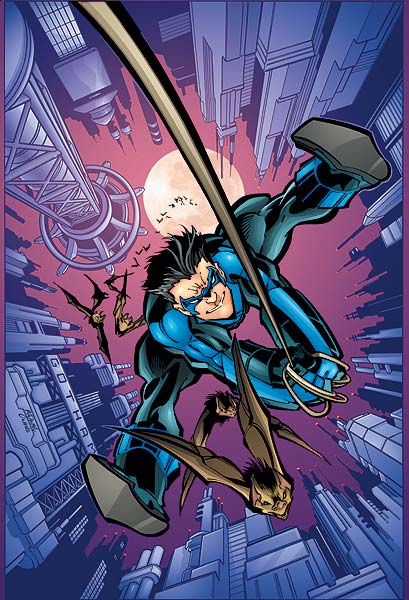
Nightwing #126 (DC) Okay, I have no idea who this agoraphobic J.J. character is, and there’s a panel in here that’s completely unintelligible to me (page four, panel four—did the mysterious assassin destroy a magazine rack that was in the back of his stretch hummer limo for some reason, or…?), but congratulations Marv Wolfman, Dan Jurgens and Norm Rapund, you’ve got me reading Nightwing again.

Seven Soldiers #1 (DC) This series of interlocking miniseries (and two bookend specials, and an unofficial prelude in JLA: Classified) about a superhero team that never even meets or realizes that it is a team was an incredibly ambitious project and, as such, I’m pretty disappointed to see it fail like this. More on that later in the week, but the long, long delay between when the last 7S mini wrapped and when this piece of punctuation of the event really drained a lot of excitement out of it, and the fact that Infinite Crisis and it’s continuity reboot occurred before 7S ended, confusing the time line and how the story relates to it’s setting even further, certainly didn’t help. I’m not sure who’s to blame, whether Morrison got too busy with 52, Batman and his Wildstorm titles to finish the script on time or if J.H. Williams III took too long to draw it (or some combination of the two), but the months it’s taken to get this issue in front of readers pretty much killed it. This storyline just had too many balls in the air—in a sense, it was nothing but balls in the air—to get lazy with the deadlines. It seems especially too bad because it didn’t need to take this long to get out. While Williams’ work here is by far the most impressive in any book this week (or for a few weeks; maybe months), the fact that he adopts different styles for each passage means DC could have just as easily found seven artists to draw this and get it out seven times faster. Ah well, at the very least Morrison and company have come up with some great makeovers for a lot of DC properties, any of which could easily carry a title of their own at this point (If not by Morrison himself, than at least in the manner of the recent “based on concepts and ideas by Grant Morrison” titles The All-New Atom and Uncle Sam and the Freedom Fighters, or Tom Peyer’s stellar work with Morrison’s reimagining of Hourman back in the late ‘90s). I know Bulleteer and Klarion popped up in 52 and Klarion’s set to appear in Robin soon (let’s hope Adam Beechen handles Klarion better than he did Cassandra Cain, Lynx and Captain Boomerang Jr.), but I’d really like to see a Frankenstein or Shining Knight ongoing, and to see future Zatanna stories call on Ryan Sook and Williams’ various costumes for Z.

She-Hulk #13 (Marvel) Wow, if there was only some way for Rick Burchett to go back in time and have always been the penciller on She-Hulk—he’s that good and that perfect for the title. Writer Dan Slott wraps up the Starfox/Thanos plot—well, except for the fall-out between Shulkie and Man-Wolf—and sends Shulkie into the big purple guy’s memories, revisiting some classic confrontations with the Avengers. Nice to see a Thor that talks like a Renaissance Fair goofball and an Iron Man who’s not a total dick again.

Superman Confidential #1 (DC) I’m not crazy about this title, which sounds like it should be a gushy peek inside Superman’s diary to read about his boyfriends or something, but you can’t complain about the creative team of Darwyn Cooke (writing, not drawing) and Tim Sale (drawing). The pair are the first creative team on a new title that is apparently intended to give the Superman franchise the Legends of the Dark Knight/Legends of the DC Universe treatment (Wonder Woman fans please note: Superman is now back up to three monthlies of his own, plus a team-up book with Batman; your girl gets one tri-monthly book). The first arc supposedly deals with Superman’s discovery of kryptonite, and the story gets off to a very wonky start, what with a chunk of kryptonite acting as narrator, but things get much better when we move to Metropolis, and get inside Superman’s head regarding his impression of his invincibility. And get an eyeful of Sale’s re-design of the (a?) Royal Flush Gang. Now, what’s up with Sale’s cover? Does Superman have to pee really bad or what?

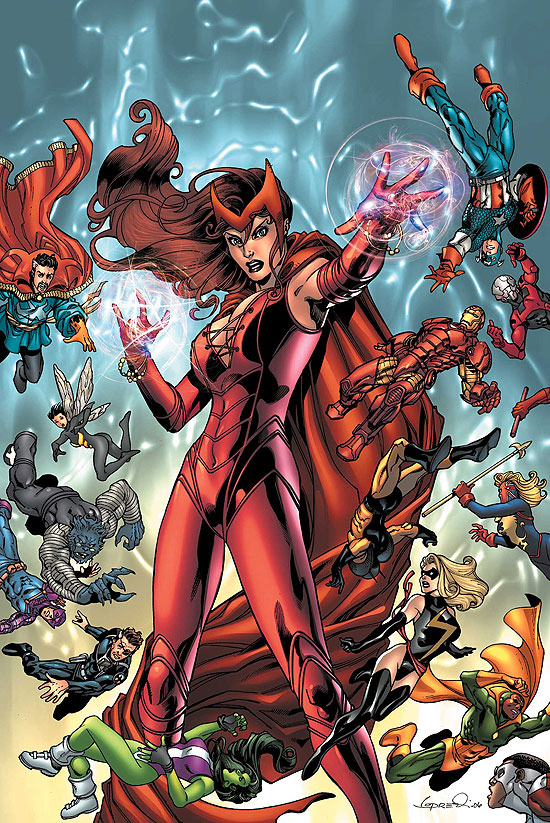
What If? Featuring The Avengers Disassembled #1 (Marvel) Man, could they have come up with a more awkward title for this special? Just as the last round of What Ifs, the ones focusing on particular characters, didn’t quite adhere to the correct What If? formula, this story, like the rest of its fellow 2006 What Ifs isn’t presented as an easy-to-phrase-and-stick-on-the-cover question (Like, “What If Venom Had Bonded With Aunt May Instead of Eddie Brock?” or “What If Ghost Rider Still Had a Horse Instead of a Motorcyle?”). That aside, Marvel’s hit upon an interesting idea for this year’s offerings—revisiting recent history. This particular issue revisits one of the company’s most controversial stories in memory, Brian Michael Bendis’ swan song for the Avengers. At the helm is Jeff Parker, who has done superb work on the Marvel Adventures version of this team, and he does a fine job here, re-telling the events of a four-part story arc, while still making room for the “What If?” angle (The question within is awkwardly phrased, in part because to phrase it properly would give away the surprise: “What If the Scarlet Witch Hadn’t Acted Alone?”). In it, Hank “Beast” McCoy is combing through the rubble of Avengers mansion to make sure they got the right gal during “Avengers Disassembled,” with Ms. Marvel doing the heavy rubble lifting for him. Along the way, he questions players (including Spider-Man, Quicksilver, Dr. Strange and Iron Man) before it’s revealed that Scarlet Witch has a few unlikely allies in her corner. Parker fills Beast’s dialogue with sharp quips, and manages a few inspired gags (like the “Dt’kho” hand-positioning in spell-casting), but the story shares a problem with all but the very best alternate universe/What If?/Elseworlds style stories: What’s the point? It’s a problem I’m afraid will face all of this round of stories, as the originals they’re riffing on aren’t terribly important stories. Confidential to Marvel: You’re doing five What If? specials this year, and you’ve done about that many the last two years. Why not just start numbering them in order and publishing them monthly or bi-monthly and making What If? and ongoing again?

Wednesday, November 01, 2006

Delayed Reaction: Green Lantern: Will World


Green Lantern: Will World (DC Comics), by J. M. DeMatteis and Seth Fisher

Why’d I Wait?: While J. M. DeMatteis’ many collaborations with Keith Giffen have resulted in some of the most fun mainstream comics of the past 20 years or so, DeMatteis’ solo work on DC superheroes is much more hit or miss. Too many misses—his ponderous Hal Jordan-as-Spectre series, the unreadable JLA/Spectre crossover—around the time of this original graphic novel’s release didn’t exactly inspire confidence. That coupled with my apathy for Hal Jordan as a character made this an easy purchase to avoid.

Why Now?: It was there. At the library. So I could read it without having to pay for it. Plus, after loving every panel of artist Seth Fisher’s recent Fantastic Four/Iron Man: Big In Japan, I was eager to see more work from Fisher.

Well?: We open in the desert, where a masked man in a cowboy get up is riding some kind of crazy alien steed. We know from the color of the mask that he’s Hal Jordan, but he doesn’t. He seems to have forgotten his name, as well as everything else about himself. So when he’s about to be attacked by angry aliens and a green wrecking ball swings from off-panel to knock his would-be foe flat on its back, Jordan doesn’t even know how he does it.

The entire 90-plus page adventure is structured as a mystery, as an amnesiac Jordan wanders through a crazy alien world, following hunches and impressions to rescue someone named “Mairwand,” though he’s not exactly sure why.

What exactly is going on is fairly easy to figure out—particularly if you’ve read the Brian K. Vaughan-helmed Green Lantern: Circle of Fire—the only way DeMatteis could have made it easier to suss out is if everything was colored green.

But it’s not a mystery story DeMatteis is interested in telling, so all that’s hardly important—instead, it’s a “Year One” era tale of how Hal Jordan mastered the most powerful weapon in the universe, and learned which parts of his psyche it takes to successfully wield a weapon powered by a combination of willpower, imagination and belief.

Jordan’s pre-Geoff Johns blank-slate personality actually works exceptionally well as an amnesiac hero, as Hal doesn’t need to show much personality, since he doesn’t know what his own personality is anyway. Sidekicks including an alien that looks like an artist Mu-Fon, a six-armed beauty named Kelly, a tiny angel dressed like a raver named Glance and a shape-changing steed called Trigger offer up the needed personalities (as well as the sorts of jokey dialogue DeMatteis’ DC fans might expect from him).

Some of these fall flat, of course, and the metaphysical mumbo jumbo can get a little tiresome now and again, but as a DC universe version of an Alice in Wonderland-type story, it’s quite charming. Particularly as it’s drawn by Fisher.

Fisher’s art style is not an easy one to describe; it seems influence by Asian art, but not in any predictable way. It’s hyper-detailed and highly three dimensional, calling to mind the work of Geoff Darrow, or a Frank Quitely with lots of time on his hands. Only brighter, looser and sillier.

He’s the perfect artist for this story, as he’s essentially called on to fill every panel with as much crazy shit as he can muster, and Seth Fisher can muster a lot of crazy shit. There are some sequences that are just brilliantly executed—the Escher like walk-and-talk scenes, the bit where Jordan’s body transforms into a giant head, the diving oath, the time spent wandering the desert—and Fisher excels at design (I particularly enjoyed the top knot-rocking samurai Egg Men) and detail (Note the brand on Trigger’s rump in the first panel).

While scores of artists have drawn Jordan and the other Lanterns over the decades, I don’t think anyone has come up with a Green Lantern ring that looked as good as Fisher’s unique version of it, one that seems like a piece of real jewelry, alien technology, a magic item and a weapon all at once, and even Fisher’s Central Battery ranks above all others.

While reading, I often found myself wondering how this story would read if it were silent. We’d miss out on the verbal gags, but it’s so well plotted and rendered that I think it would be just as clear without any words at all.

Would I Travel Back in Time to Buy it Off the Shelf?: Yeah, probably. While the story wasn’t one I could see myself reading over and over again—or lending to friends—I could definitely see myself pulling it off the shelf to flip through and look at the art every now and again (Or to point out the Egg Men to friends).

Monday, October 30, 2006

This Is Not a Graphic Novel: The Adventuress


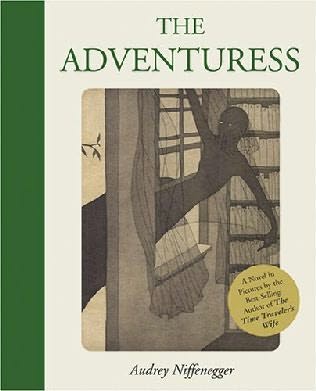
The Adventuress (Harry N. Abrams), by Audrey Niffenegger

The greatest challenge facing comics as a medium today is not the dwindling readership, the explosion of variant covers or the fact that Iron Man’s been acting like such a dick lately. It’s linguistic. Even as comic books are being talked about more than ever—and in more different venues than ever before—we collectively have a hard time of even agreeing on what to call the damn things.

Up above, for example, I just said “comic books.” Should I have said “graphic novels” instead? No, probably not; the two are different words describing different types of publications, although it’s worth noting that some works are written as graphic novels but published as comic books (and then later republished as graphic novels), and some individual comic books are written as graphic novellas or short stories.

The best term is the one Scott McCloud arrived at in his seminal, must-be-read-by-everyone-who-plans-to-ever-open-their-mouth-in-public-about-comics tome Understanding Comics: “Sequential art.” But the term, accurate as it is, can sound so…awkward and self-serious in casual usage. Unless I’m writing a scholarly work or having a discussion about the definitions of the medium with an art professor, I prefer to just say “comic books.”

I got to thinking about the challenges of talking about comic books/graphic novels/sequential art the other day, when I picked up Audrey Niffenegger’s latest from the library, but the problems of talking about the medium were underscored in Wired News’s Tony Long’s fuddy duddy blog entry Gene Luen Yang’s American Born Chinese being nominated for a National Book Award, which predictably lead to push back from more enlightened individuals (Dirk Deppey’s October 30th Journalista blog has the best coverage and link assortment I’ve seen; go there to get up to speed).

Long’s opinion can be pretty much dismissed from the point where he says, “I have not read this particular ‘novel’…”, but his main criteria seems to be that comic books are not novels, although he expresses this opinion pretty ridiculously, “This is simply to say that, as literature, the comic book does not deserve equal status with real novels, or short stories. It's apples and oranges.

“If you've ever tried writing a real novel, you'll know where I'm coming from. To do it, and especially to do it well enough to be nominated for this award…is exceedingly difficult.”

I have written a real novel (a terrible, unpublished one) and it was difficult, but nowhere near as difficult as writing, illustrating and lettering a graphic novel (which I’ve also tried and, coincidentally, ended up with terrible, unpublished results). To do the former, you need to be a master of one skill set; to do the latter solo, as Yang did with American Born Chinese, you need to be a master of at least two, maybe four (Yang’s book is in color, another step in the comic book-making process, and it looks hand-lettered, but even computer-lettering is a skill great novelists don’t need to master).

Of the response’s to Long’s opinion, Neil Gaiman (who won a short story prize for a single-issue of his comic book Sandman…a graphic short story? A chapter of a graphic novel?…fifteen years ago) had the most humorous, “[I]t seems a rather silly and antiquated argument, like hearing someone complain that women have the vote or that be-bop music and crooners are turning up in the pop charts.”

It was in reading the others though that the problem of defining the medium comes up. The Slave Labor Graphics live journal makes some good points, but what threw me was this: “Is it bound and does it use sequential art to tell a story? Then it's a graphic novel.” What does this say about comic books that aren’t bound? Did Sandman only become a graphic novel once it was collected into a trade? Can online comics never be considered “graphic novels?”

This is all a really, really long introduction to a new feature here at EDILW, where we’ll be looking at books that aren’t graphic novels or comic books or McCloud-ian sequential art, but are nevertheless pretty damn close.

First up is the Niffenegger book I mentioned earlier. She’s best known as the author of The Time Traveler’s Wife, wonderful, clever and pretty damn heart-breaking prose novel I’d recommend to anyone who likes reading books without panels, which I occasionally do when I can’t find a graphic novel. The titular character of the book is an artist who works in the medium of paper. You may not be surprised to learn, Niffenegger is herself.

In 2005 she released The Three Incestuous Sisters, “an illustrated novel” (no really; it was a story book), in which she drew full-size, colored pictures and inserted brief lines of text. It wasn’t really an illustrated novel at all. It wasn’t a novel of any kind, but a story book or picture book, of the sort you’d find in the children’s section of your library, but it wasn’t for kids. It was beautifully drawn and designed, and it flowed with a sort of dream logic; a touch of magical realism, a touch of matter-of-fact fairy tale.

Her latest is The Adventuress, a book whose title and image of a masked woman sliding out of a window may stir the hearts of superhero fans. This one, the sticker on the cover of my local library’s copy tells me, is “A novel in pictures.”
This is a perplexing thing to call a book of any kind, but particularly this book. “An illustrated novel” is a term that makes sense; it’s a novel that’s been illustrated, like Alice’s Adventures in Wonderland or C.S. Lewis’ Narnia books; hell, the version of Pride and Prejudice I read was illustrated. But what’s a “novel in pictures?" Isn’t that just another way of saying a “graphic novel?” Speaking strictly linguistically, I’d say yes.

But despite being told in both pictures and words, despite the fact that it fits loosely into the McCloud-ian (how many times do I have to write that word before it becomes a real one, I wonder?) definition of “sequential art,” and despite the fact that it’s bound, I don’t think The Adventuress truly qualifies as a graphic novel, nor a novel in pictures.

It’s definitely graphic and has pictures, but the “novel” bit seems to be overselling it. Much like Niffenegger’s Sisters book, it uses sparse sentences to describe the scenes drawn in the pictures, but here the prose element is even more sparse, with single words and colons serving as title cards of sorts for the action in the pictures. I doubt there are any more than 500 words to the whole story, and it lacks many of the elements we usually associate with the modern novel; it reads instead like “a poem in pictures.”

The narrative is rather random, and contains another magical realism plot line. If there was a point to it—that is, if the book was about something—I failed to notice it.

That’s not to say it isn’t a great book, of course, it’s just that it’s ambitions and form don’t seem to overlap with that of a novel of any kind, let alone a “graphic novel” or “novel in pictures” at all.

Our heroine is a woman with short black hair, a long skirt, long glove and no shirt covering her bare breasts. She was created by an alchemist, carried off and married to a baron, burns down his house, goes to prison, makes a cocoon, turns into a moth, gets captured by Napolean, falls in love with him, gives birth to a cat, and so on.

Niffenegger’s sense of character design has a primitive feel to it, one that’s covered up by her command of color and framing of each scene. She also exploits the medium of drawing to great effect, creating images of her heroine’s spirit by simply not coloring in the drawing of her, for example, or giving the illusion of movement or change by drawing multiple arms coming from the same elbow.

It’s a really remarkable-looking book, and one I’d highly recommend readers look for at their local libraries (or read for free at a nearby big box book retailer), if you can’t afford the $27.95 for a five-to-ten minute read. Yes, it’s a remarkable book. It’s a gorgeous picture book, it’s a well-designed story book. It’ s a poem in pictures, a narrative image collection, a bound gallery show.

But it is not a graphic novel.

Nothing says evil like a goatee


Artist Keith Giffen’s breakdowns for 52 #24—the issue that featured the debut of the new, short-lived Jusstice League line-up and the check-ins with Martian Manhunter and Green Arrow—are currently available for perusal at 52thecomic.com.

As the amount of attention I lavish on it each week here at EDILW indicates, I’ve really been digging the series, but I haven’t paid too much attention to Giffen’s breakdowns, a habit I may soon have to change, based on how much fun this breakdown-only re-read of #24 was, and how many possible clues about where this whole thing is going are buried in Giffen’s sketches.

The highlight is definitely the image above, Giffen’s version of the appearance of Evil Skeets, sporting a goatee (perhaps this is the Skeets of a different dimension then?). It sure explains the shocked expression on Firestorm II’s face in his sketch of the panel.

Note the margin, where Giffen inserts a “just kidding about the goatee note.” I guess with a schedule as tight as the one facing the 52 artists, there’s the possibility that someone would accidentally draw, ink and color that goatee, huh?

Also of particular interest is page seven, which shows the Martian Manhunter-made sculpture. It’s drastically different than the one penciller Phil Jimenez ultimately drew (and thank God for that—that panel of Jimenez’s was perfection). In Giffen’s sketch, the only one’s pictured are Booster, Beetle, Ice, Vibe, Red Tornado and Sue, which makes one wonder what order he sculpted them in, and why he skipped so many of his other allies. Also included is a sculpture of Blue Jay, who not only never died, but is more alive and well than he’s been in quite some time (see Action Comics #841-#843 for proof of this).

On page thirteen, the reveal of all those crazy Everyman characters like Dynamole and Poledancer, Giffen draws some weird-ass looking characters, including what looks like a grasshopper man of some sort, and an egg-shaped hero in the upper righthand corner. In the slaughter to follow, Ambush Bug dons weenie roast clothes and props, a joke Jimenez and company apparently decided to pass on, thinking it was a little dark to have a Leaguer running around with an apron and hotdog on a stick amidst burning corpses.

Finally, Giffen’s been drawing Osiris in a costume that resembles Black Adam’s exactly, or the costumes favored by the “White” Marvel Family, while in the finished products, Osiris’ costume is unique among the Marvels, and sans cape.

Now, if you’re looking for clues as to what happens next, it might be important to note that on the last page, where Atom-Smasher is looking at headshots of villains to recruit into his Suicide Squad, the only one Giffen draws out and names is Count Vertigo, who therefore seems like a shoo-in to make the team.

Sunday, October 29, 2006

Actually Essential Storylines: Nightwing


This week’s issue of 52 featured the origin of Nightwing, the superhero persona Dick Grayson took on after he had outgrown that of Robin and decided to strike out on his own, rather than serving as Batman’s sidekick any longer.

His origin and history is among the more complicated in all of the DCU, seeing as he’s one of the company’s oldest characters, and one who’s been in continuous publication since he was first introduced as Robin.

I don’t envy writer Mark Waid the task of boiling down decades of comics into a seven-panel origin story, eve if his collaborator is George Perez, an artist who can make each panel feel like a page. Waid went an odd route, essentially just retelling Grayson’s Robin origin, before spending one panel on the fact that Robin eventually flew the nest and became Nightwing. The last panel is devoted to Nightwing’s presents rather than his past; a rather odd choice that keeps the story from feeling timeless. If DC collects all of these back-ups into a Secret Origins or Who’s Who trade in a year or so, this one will be already dated.

I was a little surprised to see that Waid chose not to mention the Teen Titans at all, seeing as how they were such a huge part of Dick Grayson’s development, particularly as he grew from a sidekick into a hero, and became one of the world’s best team leaders. Also ignored was the Kryptonian origin of the name Nightwing, and the entire time Grayson spent in Bludhaven (i.e. the first 100 and change issues of his solo series). Reading the origin, it’s almost as if Grayson went right from being Robin to being Nightwing in Nightwing #125.

Of course, I suppose that’s why there’s the “Essential Storylines” listed at the bottom of the origin. DC does a stronger job than usual here, but we can always dissect it and add to it.

Here’s what DC suggested:

Detective Comics #38: This is the first appearance of Robin, and the issue features an oft homaged and parodied cover, featuring Robin bursting through a paper hoop held aloft by Batman. I suppose this is an “essential” story, but good luck hunting down the single issue (one’s currently going for over $2,000 on eBay). You’re better off seeking it out in an archive collection, or in the much more affordable Batman in the Forties trade. Of course, the same story has been told and re-told by DC, including in their very next suggested storyline.

Robin: Year One: This trade collection is currently out of print, so may be a tad hard to find. But it’s well worth the hunt. Written by Chuck Dixon (who’s written some of the best Nightwing stories ever) and Scott Beatty (a talented Bat-scribe who doesn’t get enough work) and penciled by Javier Pulido, it tweaks Robin’s post-Crisis origin story, and is presented in the clean, elegant art style that looks consistent with Batman: Year One.

Nightwing: Year One: If you want to get a handle on Nightwing as quickly as possible, this is the one story you need to read. Dixon and Beatty again handle the writing, while longtime Nightwing penciller Scott McDaniel handles art chores (with Andy Owens). The story picks up as the Batman/Robin alliance is crumbling, then follows Dick as he quits, visits Superman for guidance, hangs out with Batgirl and Jason and fights Two-Face (sort of). Dixon and Beatty answer every question you’ve ever had about Nightwing in this story, including why his first suit looked so much like Deadman’s, what’s up with the yellow in it and why he picked that particular name.

Teen Titans: The Judas Contract: These days, it’s hard to believe that Teen Titans was once X-Men popular, but it’s the truth. Or at least, that’s what all the older fans say. And this is one of the most powerful stories of that era, one that Brad Meltzer wrote an essay about in Give Our Regards To The Atom-Smashers! and Cartoon Network’s Teen Titans ‘toon re-imagined. It’s also the first historical appearance of Grayson as Nightwing.

Now, here’s what they missed:

Batman: Year Three: I was a little surprised that DC even bothered with the above-mentioned Robin: Year One, seeing how the exact same story was already told in the Batman monthly previously, way back in 1989. Marv Wolfman wrote the story, which featured Grayson returning to Gotham to face an obsessed Dark Knight, while his origin is retold. The art is courtesy of Pat Broderick and John Beatty, with George Perez handling the covers (Covers which Perez looked to for guidance in his Nightwing origin in 52, by the way). The four-part story was never collected as far as I can tell, but ran from Batman #436-#439. The story of how Grayson became Robin, and why Batman even wanted a Robin, is also told in Jeph Loeb and Tim Sale’s epic mystery Batman: Dark Victory, a sequel to their Batman: The Long Halloween. As is often the case, Loeb is very, very loose with continuity (the story barely resembles that told in either of the other Robin origins we’ve mentioned so far), but there are some incredibly fun moments, particularly near the end. I actually laughed aloud when Batman first notices Dick’s superhero costume.

Batman: A Lonely Place of Dying: Wolfman followed his “Year Three” story with “A Lonely Place of Dying,” which crossed over with The New Titans and featured art by George Perez and others. As far as Bat-history goes, this one is a must-read. Batman has been acting more and more unhinged ever since Jason Todd died, and Alfred and Commissioner Gordon are beginning to think he’s not only lost it, but is going to kill himself if he keeps going like he is. A young boy by the name of Time Drake thinks he knows how to save Batman: He needs Robin back, as his lightness provided a counterpoint to Batman’s darkness. So Drake approaches Grayson and tries to convince him to take up the Robin mantle again. How does he know who that Grayson used to be Robin? He figured it out, just like he figured out Batman was really Bruce Wayne.

It’s one of the most emotional Batman stories of the era, and a pivotal moment, as it signals the end of his estrangement with Nightwing and sets Tim Drake on the path to becoming the next Robin. DC has allowed the trade to go out of print for some crazy ass reason; but you can hunt it down in Batman #440-#442 and The New Titans #60 and #61. Art and covers by Perez, who’s joined by Jim Aparo and Tom Grummet on the interiors.

Batman: Prodigal: After Batman was crippled during the Knightfall crossover and his then-girlfriend kidnapped by her mad brother, he and Alfred take off to rescue her, leaving Gotham in the capable hands of Robin and Jean-Paul Valley, a.k.a. Azrael, who had a little experience filling in for Batman, and was in the process of being trained by Robin. Unfortunately, Azrael proves to be a sucky Batman, and, by the time Batman regains the use of his legs and returns to Gotham, AzBats has gone completely around the bend. Nightwing joins forces with Robin, Catwoman, Shiva an Wayne to take Valley down, but Batman doesn’t reclaim the mantle of the Bat right away. Instead, he claims to need some “me” time, and he takes a mysterious vacation of some sort (it’s never been revealed where Batman went off too). So who was to take care of Gotham while Batman was gone? The new Batman, Dick Grayson. This cross-over ran through all three of the Bat-books at the time, and was eventually collected into trade. It wasn’t a terribly good story, but it was somewhat interesting to see Grayson trying to fill in his mentor’s boots for a while.

The dark Nightwing returns: Post-Prodigal, Nightwing would become something of the third-wheel for the Dynamic Duo, helping Batman and Robin out whenever they needed him. While Batman team-up stories became common place after the mid-‘90s, perhaps the most important was Batman: Gotham Knights #20 and #21, during which Bruce Wayne finally, officially adopted Grayson, so that he was no longer his “ward” but his actual, honest-to-goodness son.

Apparently to keep him out from underfoot, Batman sent Nightwing to an even rougher, tougher city right next door to Gotham City which for some reason no one ever mentioned before—Bludhaven. At this point, ‘Wing earned his own title by Dixon and McDaniel, who proceeded to give him his own rogues gallery (much of their run, and Dixon and Greg Land’s run, has been collected into six trades).

Grayson was also on-hand for most of the Bat-crossovers, most notably the back half of the excellent “No Man’s Land,” “Officer Down,” “The Hunt For Oracle” (a Nightwing/Birds of Prey crossover), “Bruce Wayne: Murderer” and “Bruce Wayne: Fugitive,” in which Nightwing and Batman come to blows. ‘Wing played a major role in DC’s last line-wide crossover before Infinite Crisis, the hit-or-miss “Joker’s Last Laugh,” and, I suppose, he was also prominently featured in Batman: War Games, but I certainly wouldn’t recommend reading that.

The Teen/New/Adjective-less Titans: Between the time he quit being Robin and the time he earned his own title, the various Titans books were the best place for Nightwing stories, and they are understandably legion. Other than the aforementioned Judas Contract, the only other collection DC offered post-Nightwing was New Teen Titans: The Terror of Trigon (also out of print).

Nighwing left the Titans in Arsenal’s hands around the time of “Zero Hour,” but he was often coming and going. During Dan Jurgens’ relaunched Teen Titans, Nightwing, Arsenal, Tempest and the Flash confronted Jurgens’ original Titans (Prism, Joto, Argent and Risk) in “Then and Now.” Nightwing would join and lead the next incarnation of the team, in the post-JLA dream team incarnation of the team, now simply called The Titans. It featured a Titan from each era of the team, and was lead by the five original Titans. It got off to a great start, thanks to writer Devin Grayson, but after she left it went through a string of worse and worse writers and new directions, until it was eventually, mercifully cancelled leading into Titans/Young Justice: Graduation Day, a terrible miniseries which lead into the even more terrible Outsiders title, focusing on a team of interchangeable heroes led by Nightwing. I’d recommend an issue or storyline from it, but I can’t honestly think of a single Outsiders story that I don’t wish I could un-read myself.

The major Leagues: Nighwing was called in to help out some former Justice Leaguers in the first three issues of the Justice League Task Force; he helped Gypsy, Flash, Aquaman and Martian Manhunter on a mission to infiltrate a foreign country and shut down a doomsday device, though he grated on the Justice Leaguers’ nerves. In JLA/Titans, Devin Grayson and Phil Jimenez give us an epic, constantly escalating battle that eventually involved every former Titan and potential Titan vs. every Leaguer and League reservist and ally. When the two teams square off, with mentor battling student, Batman and Nightwing do battle—only with words instead of fists. In addition to being one of the most fun Titans or JLA stories, this story provides an eloquent distillation of the differences between Nightwing and Batman.

When Batman and the rest of the JLA disappear into the past and are presumed dead in JLA arc “The Obsidian Age,” Batman’s contingency plan for what happens when the entire League is killed at once kicks in, and a new League is recruited. The ragtag lineup consists of The Atom, Firestorm, Faith, Hawkgirl, Green Arrow, Major Disaster and Jason Blood, lead by none other than Nightwing. He does a fine job of it too, until Batman and the League return to the present, where Dick greets him with a hug. Confidential to DC: This line-up would make for a great story arc in JLA: Classified.

Other universes: While Dick Grayson-as-Robin appears rather commonly in DC’s Elseworlds and other alternate universe stories, Dick Grayson-as-Nighwing is far rarer. In the Ross-iverse’s Kingdom Come, Grayson’s Nightwing-hood is acknowledged, though he takes on a new name—Red Robin. He has a daughter with fellow New Titan Starfire though, and she names herself after both parents—Nightstar.

In the Adventures-iverse, Nightwing fights alongside Batman, Batgirl and Robin, in the Gotham Adventures monthly, which was set after Dick Grayson left Gotham and relinquished the Robin mantle on the Bruce Timm-produced animated series. There was even a Nighwing-centric miniseries, Batman Adventures: The Lost Years, which shows how Grayson went about training to become long-haired hero Nightwing.

Other media: Dick Grayson is one of the most popular DC heroes to adapt into other media—only Superman and Batman have been adapted more often into non-comic book media—but as Robin, rather than Nightwing. ‘Wing does appear in later episodes of Timm-produced Batman cartoons, 1997’s The New Batman Adventures (the series in which all of the characters got re-designs).

Nightwing also pops up in the Teen Titans ‘toon, in an episode where Starfire gets zapped into the future and meets the grown-up Robin, who now goes by the name Nightwing.