Monday, November 12, 2012

Review: Spider-Man: Spider-Island Companion

Just like it says on the cover, this huge, 360-page hardcover is a companion collection meant to compliment the similar-in-size Spider-Man: Spider-Island; while that book collected all of the chapters of the "Spider-Island" storyline from issues of Amazing Spider-Man, Venom and a few one-shots, this one collects all of the tie-ins from other books, mini-series and specials.

In other words, this is the unimportant parts of the story, but, because of that, it's also the place where you can see creators having a bit more fun with the concept, more striking artwork that falls a little farther away from the House of Ideas' house style and answers to frivolous questions like "What was Hawkeye doing while Spider-Man was fighting The Jackal's mad scheme?" and "What if The Black Panther had six for twenty minutes?" and so on.

There are a dozen stories culled from sixteen different comic books included here, and they vary widely. I couldn't muster up the interest to read all of 'em, but there's certainly some good stuff in here, and unlike the collection it's a companion to, there's a lot more for a causal reader to like here; if you're not into the "Spider-Island" thing, then you won't get anything out of Spider-Man: Spider-Island, but if you're not all that interested in, say, what Shang-Chi or Hercules are up to when the whole city is coming down with Spidey powers, chances are you'll find something else you do like in this...even if it's just some really great art.

As it's an anthology, let's take the stories one by one, shall we...?


"Tingling" by Greg Rucka and Max Fiumara

The writer of this eight-page short, probably pulled from one of the anthology one-shots like Spider-Island: I Love New York, likely tips one off as to who the Marvel hero starring in it is, although it's meant as a surprise reveal made only in the penultimate panel. It's the story of some spider-powered bank robbers using their great powers to commit great crimes, and is mainly notable for Fiumara's excellent, highly-expressive, illustratorly artwork. He draws neat Spider-Man heads and flexed, angular limbs, and there's a touch of Sam Kieth in some of his close-ups. I've like Fiumara's art since I first saw it, and I was surprised and pleased to see it in a silly Marvel comic like this, although now that I look up his bibliography, I guess I shouldn't be, as he's done plenty of work for Marvel in the past.


Spider-Island: Deadly Hands of Kung Fu by Antony Johnston, Sebastian Fiumara, Leandro Fernandez and John Lucas

This is a three-issue mini-series teaming Shang Chi, he with the deadly hands of kung fu, with Iron Fist against The Bride of Nine Spiders. I made it through the second issue, when Silver Sable appears, before completely losing interest, although I did look at the pictures on the next four pages, and Fiumara, Fernandez and company provide some very nice, slightly sketchy art, ink lines clearly visible, which colorist Dan Brown did not bury under shitty coloring, so hooray for well-rendered, well-produced comic book art from Marvel!

I imagine this is better if you have some idea who some or all of the many characters involved are, and/or if you give a shit about them, but I couldn't get into it.


"Spider-Mom" by Kelly Sue DeConnick and Chuck BB

Yes, Chuck BB. This is another short akin to the opening one by Rucka, although it features a very busy civilian mom and how she uses her newfound spider-powers to go about her regular day. It's fun and funny, and mostly notable for BB's art, which looks absolutely like nothing Marvel publishes outside of their very occasional projects like Strange Tales.


Spider-Island: Avengers #1 by Christopher Yost and Mike McKone

You know, I read Alias, and while I'm sure Jessica Jones was stacked—it being a superhero comic and all—I sure as hell don't remember her looking like she does on the cover Leinil Yu drew for this thing. Jesus.

Anyway, this follows Avengers Ms. Marvel, Hawkeye and Jessica Jones (not wearing that costume shown on the cover, but street clothes with tight, black, elbow-length gloves), as they team-up with Frog-Man to deal with the chaos in Manhattan and fight Flag-Smasher, one of of my favorite Marvel super-villains.

With a few segments featuring Squirrel Girl too, this has a pretty fun cast of weird Marvel characters, and Yost writes them all rather amusingly, although I think he might have gone a a bit too far with Frog-Man at the climax. Dude's costume is funny enough all on its own.

Hawkeye has developed spider-powers, and Yost inventively has him having great trouble trying to control his new stickiness, with his bow, arrows and other objects sticking to his hands.

McKone provides the sort of straight-forward, totally legit superhero art you'd expect from a pro with his pedigree and years of experience.


"Charlotte's Web" by Joe Caramagna and Max Fiumara

Ah ha ha ha ha ha! "Charlotte's Web"; it has the same title as a book and a movie! That's...funny....maybe...? This is another short piece about a civilian getting spider-power; in this case a little girl named Charlotte, who uses her powers to take down a couple of inept bad-guys.

The little-kid-with spidey-powers concept hals already been explored and mined for laughs twice in this collection before this story comes along, so it seems tired by the point a whole eight-page story gets devoted to it. Fiumara's art is even looser here; I hope Marvel gives that guy a monthly title I want to read at some point in the near future.


Spider-Island: The Amazing Spider-Girl by Paul Tobin and Pepe Larraz

Another three-issue miniseries featuring one of Marvel's Spider-Girls, none of whom in any continuity I can seem to bring myself to care about. I think this one is the one that used to go by Arana and wear a dumb vest, although now her hair is grown out and she wears one of the old Spider-Women's old costumes...?


I like Tobin's writing, and artist Pepe Larraz does great work, but I couldn't bring myself to read this one. Looks like some wasp men, The Hand, Madame Web, the new Hobgoblin and a spider-powered Kingpin are all involved.


"9 Lives" by Skottie Young, Dave Guertin and Greg Baldwin

Next to BB's piece, this is the most cartoony thing in the book, and according to the credits, Young writes rather than draws it, although it definitely looks to be done in Young's style, albeit a looser, more energetic version of it.

It's about a cat who gets spider-powers, dons a Spider-Man costumes and fights Venom-possessed pigeons, but it ends up all being a dream, because apparently a cat with spider-powers crosses some line that giving The Kingpin, J. Jonah Jameson and babies spider-powers does not.


Spider-Island: Spider-Woman by Fred Van Lente, Guiseppe Camuncoli and Klaus Janson

Spider-Woman fights a lady in a dumb costume called Gypsy Moth for 20-pages or so. I didn't read this one either, save for a few stray narration boxes, like this one: "Damn! Gypsy Moth used her telekinetic control over clothing to change my costume to look like--" Telekinetic control over clothing...? That's a super-power I've never heard of.

Camuncoli and Janson's art make for a pretty neat combination, but then, Janson inking just about anyone's pencils usually makes for something neat looking, given Janson's distinct style.


Spider-Island: Cloak & Dagger by Nick Spencer and Emma Rios

I tried really very hard on this one, as I love Rios' artwork, like the visuals of the main characters despite never having read anything other than guest-appearances from them and Spencer is supposedly a rising star writer who I felt I should start paying a bit more attention to.

I couldn't make it through the first twenty pages, though.

I did look at every panel though, and Rios did an incredible job with everything from layouts and staging to character acting and costuming to rendering in her own style. Mr. Negative appears to be the main antagonist, and I didn't actually see a whole lot of Spider-Island business, save for a scene where the pair help the Avengers fight some spider-powered, spider-costumed crooks and another where Dagger, wearing street clothes, fights some spider-monsters (Rios draws the best spider-monsters; hers look like shaggy-legged tarantulas, while the ones that appear in the main "Spider-Island" story look smooth, brown and hairless...and not really all that spidery. I suppose it comes down to how good Rios is with design and texture).

Maybe I'll re-borrow this from the library at some point in the future and try again, but with over 350-pages of comics with different characters by different creators, it was very hard to slog through the stories that didn't grab me right at the outset.


Herc #7-#8 by Greg Pak, Fred Van Lente, June Brigman and Roy Richardson

I lost track of the Pak/Van Lente Hercules story a while back, thanks in large part to Marvel shifting it from title to title and miniseries to miniseries, with delays between chapters and a price-increase in there somewhere, and I haven't been able to find it again in trade yet, as I don't exactly remember where I left off. This is one of those storylines that Marvel seemed to be playing defense on, trying their damnedest to keep readers from reading it (although I suspect their true intent was to find a way to keep sales high enough for Pak and Van Lente to keep telling it somewhere, even if they and Herc couldn't sustain a monthly), and I like to think of myself as a fairly engaged follower of the goings-on of the Big Two.

Anyway, this is two issues of the latest incarnation of Pak/Van Lente's Hercules story, in a title called Herc featuring a de-powered Hercules. In these two issues, however, he gets powers, they're just Spider-Man's rather than his own.

He gets a Spider-Herc costume too, and it's neat to see such a big, beefy Spider-Man spider-ing around. He battles the X-Men (Wolverine, Gambit, Storm and Emma Frost) and has some dealings with Ananzi and Arachne.

The climax, in which Herc has transformed into a sort of centaur (if you subtract the horse part and replace it with a spider-part) deals with Arachne is...interesting. The Brigman/Richardson art team is decidedly old-school in flavor, but it's good old-school.


Black Panther: The Most Dangerous Man Alive #524 by David Liss and Francesco Francavilla

This issue seems to be continuing whatever was going on in this title before it was forced to crossover with "Spider-Island," so, for all intents and purposes, the main thing it has to do with the storyline is that The Black Panther has six arms instead of two.

He chases a car-driving villain named Overdrive and fights Lady Bullseye. It's no great shakes, save for Francavilla's art, which is incredible. I have no idea how this title was, but Francavilla's a great artist, well-suited to a crime narrative and a visually interesting character like Black Panther, although I suspect this was a particularly insane chapter, and difficult to judge the book by.


Spider-Island: Heroes For Hire #1 by Dan Abnett, Andy Lanning, Kyle Hotz and Bob Almond

I rather liked the cover for this one, which boasts some crazy visuals that don't actually occur within the book (How did they all make new costumes to allow for their extra limbs? Would Falcon be able to fly like this?)

This is tied to the already-canceled and abandoned (I think...?) conception of Heroes for Hire as Marvel's answer to the old Birds of Prey, with Misty Knight playing the Oracle role, and various street-level characters and mercenaries like The Falcon, Black Cat, Silver Sable, Elektra and so on acting as her agents.

In this story, they are all dealing with various Spider-Island craziness, although it is mainly the story of Misty developing feelings for Paladin, who is in the process of turning into a giant spider. Like that of McKone and Brigman, Hotz's art is of a more standard super-comic variety than a lot of what you'll find in this collection, but I really like it here; there's just enough of a flair to it to give it a slightly cartoony edge. It reminded me an awful lot of John McCrea's art on Htiman, save with stronger, sharper blacks and better, brighter coloring.

Saturday, November 10, 2012

Super what now...?

Super Kid ice cream?! Super Kid ain't no ice cream I ever heard of.

Friday, November 09, 2012

Review: Batman: Arkham City

I was pretty disappointed with this trade paperback, which collects both the five-issue 2011 miniseries of the title by longtime, cross-media Batman writer Paul Dini and video game designer Carlos D'Anda and five shot stories referred to as "Batman: Arkham City Digital Chapters." The latter are very short stories focusing on particular characters from the comic and/or the Arkham video games, and created by a variety of writers and artists (They appear to be written by some combination of Dini and Fridolfs, and drawn by a half-dozen artists, of whose work Dustin Nguyen and Ted Naifeh's are the most easily recognizable).

I was more disappointed with it than I tend to be with other mediocre Batman comics, however, because this is a comic book series I specifically wanted to read (or at least very close to it), and the sort of series I know I've asked for publicly and repeatedly before it was ever announced.

As many of you know, I love comics and I love Batman, but I am not the least bit into video games, and stopped playing them sometime around high school. To get all Old Man on you for a second, I think they are a tremendous waste of time, at least for me; even if I had access to a gaming system and a game, I can't imagine sitting there and playing any for very long, as I'd feel too guilty about the time I was wasting when I could be doing something more productive (Although, this is my idea of productive, so seriously, don't mind me; I'm not casting aspersions on gamers, simply relating how I personally feel about me personally playing video games).

But! That Arkham Asylum video game sure was popular, I know, based on all the damn articles all the damn comics news sites have written about it. And, skimming those articles, the game sure seemed to have a pretty unique design aesthetic for Batman and his entire rogue's gallery, looking an awful lot like a live-action Hollywood Batman movie on which the guys who design MacFarlane toys served as costume designers and art directors. I kinda wanted to see how they designed their Scarecrow and Penguin and Bane and Mad Hatter and so on, and how they played those characters, all of whom have been designed and redesigned so very many times over the years.

So, I thought, it would be cool if DC published a comic book adaptation of the game, presenting the game's story (I assumed there was a pretty involved story to it, right?), using those designs, for curious Luddites like me...and, given how goddam popular the game was, it seemed like it would be a good business move for DC. If millions of folks are buying and playing the game, and you're publishing somewhere between six and fifteen Batman comics every month anyway, why not make one of them especially to appeal to the folks playing that game...?

This is the comic book they came up with. As the blurb on the trade paperback cover says, it's "The lead-in to the BEST-SELLING VIDEO GAME", released between Arkham Asylum and its sequel game Arkham City, and meant to serve as a bridge between the two.

And it's not very good. It's competent, sure, but rather than adapt a story from either game, its attempt to "bridge" them both means it's continuing a story from one game (which I'm completely unfamiliar with, although it seems to have had an incredibly ridiculous ending) and foreshadowing the story of another game, which I'm also completely unfamiliar with (and asks for a pretty big suspension of disbelief commitment, even for fans of Batman comics), and, at the time of release in serial format, everyone would have been completely unfamiliar with.

The story is this: After the events of the game Batman: Arkham Asylum, The Joker is in a wheelchair and facing a chronic disease as a result of his using a super-drug called Titan, which seems to be a lot like Bane's Venom (it turned The Joker into a Hulk-like version of himself in the flashback's). His girlfriend, Harley Quinn, breaks him out of jail just as he and the rest of the Arkham inmates are about to be transferred.

Where are they being transferred? Well, the new Gotham City Mayor is the former warden of Arkham, who has been elevated to the status of hero after whatever went down there (I'm assuming Batman was the real hero of the Arkham incident, so if Gotham would have made him mayor, I assume the need for a sequel game could have been avoided—or else the game would have been very, very different, as players guided Mayor Batman through various meetings and ribbon cutting ceremonies).

He is being controlled via hypnosis through a mysterious figure (who is only mysterious if you've never read a Batman comic or seen a Batman cartoon), into endorsing the craziest, dumbest plan ever: Transforming half of Gotham City into a sort of open-air asylum/prison/free-range supervillain zoo called "Arkham City."

From what we see here, it appears to be an adaptation of the storyline from "No Man's Land," customized into a video game-ready format. I honestly didn't quite get it, as the scenes set in the newly opened Arkham City show us that prison guards will work inside the city, so...I don't know. It doesn't make a lot of sense, logistics-wise, which is probably fine for a video game and/or the telling of a story set in that setting, but since the premise of this series/story is how Gotham City goes from Point A (a maximum security prison/asylum where they store there super-villain mass murderers) to Point B (a city where the super-villain mass murders can start their own society), selling the premise would seem to be a priority.

Instead, the issues are devoted to slowly revealing the Big Bad behind the mayor, a plot involving a terrorist attack conducted by two suicidal Titan-abusers to convince the public of Gotham that super-crime is still a pretty big problem, and moving Batman, The Joker, Harley Quinn, The Penguin and a few other characters into place for the start of the game.

D'Anda's artwork is fine, and while he's drawing the game's versions of the characters, his style is very comic book-y, and doesn't seem to be aping the aesthetic of the game at all. It looks pretty much like your standard-issue issue of a Batman comic, and the characters and their costumes aren't vary too terribly different than their DCU versions...at least, not the majority of the characters who appear for much length of time within this comic (I suppose that is due in large part to the fact that DC Comics hasn't really had standard designs for any characters for a long time; every Bat-villain can and often does look completely different in every appearance, depending on how the artists involved choose to draw them).

Of the characters appearing here, most look just like their comic book counterparts. The Batman of the games seems to be very heavily armored and to look closer to one of the movie Batmen then the comic book's Batman, but D'Anda draws him with white triangle eyes and a swathe of black cape that covers his seam-filled armored costume. Catwoman looks like comic book Catwoman, save for her gigantic breasts and the fact that her costume is unzipped to display them. The Joker, Penguin, Riddler, Two-Face and Poison Ivy all look like themsevles, with minor variances (The Penguin doesn't have a long, beak-like nose, Ivy has some kind of green henna-looking skin formation on her legs, etc).

Of the villains Mr. Zsasz, who appears only briefly, seems to be the most radically reinvented, shown shaved bald and with fewer, more realistic looking hash-mark scars, and, of course, Harley Quinn, who has ditched her costume and clown make-up, and basically just looks like a blond lady with a lot of eye-liner wearing red and black clothes.

Visually, the most thoroughly reinvented of all of the characters is Robin, who most closely resembles the Chris O'Donnel version from the Joel Schumacher Batman films, albeit with a cooler costume. It's not clear who he is—I think he's meant to be Dick Grayson—but he's clearly pretty old and pretty big, being about the same size and shape as Batman himself.

The part of the book I actually ended up enjoying the most was the 13-page concept art section by D'Anda and Brandon Badeaux, which featured their attempts to redesign characters for the game. In addition to Joker, Harley, The Riddler and Two-Face, who appear in the comic, there are a few pages of sketches also devoted to Mister Freeze, Solomon Grundy and Talia al Ghul, who do not.
They aren't simply finished sketches, but show different choices or directions that they could go in, and so we get to see, for example, seven different Talias with different hair styles and costumes (all extremely revealing, with all showing off her breasts and half revealing her belly, and all looking like very tight versions of something you might be able to buy off the rack at places that sells stripper clothes and motorcycle gear), or four versions of Harley, again, all of which are extremely revealing, and, here all of which are based on fetish-gear. One of 'em has a version of her regular mask, one has a bondage mask, the others are mask-less. All have corsets and garter straps, and piercings or tattoos or both. Two of them feature her wearing the sort of novelty furry handcuffs you'd find at a sex shop.

It's kinda weird really, and while I don't know what version of her appears in the Arkham City game, these are notably for reimagining her as such an overtly sexualized character; not as in "drawn sexy" or "meant to be there for cheesecake value," but as in she is wearing the sort of gear you would find at a fetish or Rubber Ball, from head to toe.

Badeaux' Solomon Grundy and Two-Face are the most intriguing sketches. Beadeaux's Grundy seems to take cues from Dough Mahnke's design of the Frankenstein who appeared in the Grant Morrison-written Seven Soldier's, with a ragged Victorian coat and stitching; he's also very zombified looking, with musculature peeking out of ripped-off patches of skin.
The Two-Face almost all look cooler than the one that appears in the preceding comic; one features the "bad" side of him dressed in clothes that look as burned as his face, with his pant leg and suit-sleeve partially burned off, as if the left half of his suite was doused with fire or acid just like his face. In two of the sketches, Two-Face seems to be trying to hide or at least obscure his scars; bearing bandages all over it and, in another, a Phantom of the Opera-like half mask, made of gnarly-looking iron. I quite like that iron mask; both it and the bandages reminded me of the two-part origin episodes form Batman: The Animated Series, although I can't recall ever seeing him wear a mask like the metal one (In that cartoon, he awakens with bandages over half his face, but eventually loses them, and later wears half of a cowl/hood).

I can't really recommend this trade to anyone, it's not very good, and there are literally hundreds of Batman trades of equal or better quality out there, but I think the Arkham Asylum-derived stuff is at least worth taking notice of, if only because of the way it seems to have been a fairly successful outreach to a Batman-interested audience beyond direct market consumers, the way it seems to have influenced specific design choices of "The New 52" line-wide redesign (New 52 Batman, for example, looks more like the video game Batman then the Batman who appears in this comic based on the video game, and obviously New 52 Harley Quinn is heavily influenced by the game's Harleys; in fact, much of Jim Lee and company's New 52 designs seemed to have kept that live-action film costumes-by-MacFarlane Toys aesthetic visual accent) and the great extent to which DC's New 52 seem to be targeting the Arkham game audience with their content.

I'd still kinda like to read a straight adaptation of the games in comics format featuring superior artwork. In the meantime, I suppose I can just wait for DC to publish a paper collection of their Batman: Arkham Unhinged digital comics, which, if nothing else, should provide a decent look at the character designs that went into the games (Or hell, maybe there's a book simply devoted to character designs sketches...? Maybe I'd like that best of all...)

Thursday, November 08, 2012

Meanwhile, at Robot 6...

Today at Robot 6 I have a post about the challenges of sound in comics, and how Frank M. Young and David Lasky met those challenges in their biography of the musicians who star in their The Carter Family: Don't Forget This Song. You can go read it, if you like.

Wednesday, November 07, 2012

Meanwhile, at ComicsAlliance...

So it looks like it's already time for best-of-the-year lists to start rolling out, as Publisher's Weekly has apparently released theirs. I would say that it seems awfully early, with almost two whole months worth of Wednesdays to go, but PW is the exact sort of outfit that gets copious review and advance copies from everyone, so they're probably already getting 2013 stuff.

I like when these lists start coming out, because it usually reminds me of a great deal of great material that I might have missed during the year (regarding PW's list, I've read three of the five, and heard of all five, so hooray!), and they tend to serve as a good resource for future reading. They also, unfortunately, tend to stress me out, as they make me think I have to read all of those books myself within the next few weeks if I plan on going my own list, and being rigorous about it.

One book not on PW's list, but one that I will be shocked if it doesn't make my own this year, is Mark Siegel's Sailor Twain. This has all been a very long—too long!—build up to me simply linking to ComicsAlliane, where my review of Sailor Twain can be found. Man, this post will never make the Best EDILW Posts of 2012 list...

Friday, November 02, 2012

Meanwhile, at ComicsAlliance...

Hey remember last week, when I linked to that review of Steve Weissman's excellent Barack Hussein Obama I wrote for Las Vegas Weekly...? Well, I had a lot of questions about how that comic strip got made, so I asked those questions to Weissman, and you can read his answers at ComicsAlliance today, in a piece with an extremely generous amount of preview pages from the book. You can read it here. The above strip is one of my favorites, featuring Sasha and Malia meeting Obama's evil overlord...or whatever.

And while I'm linking to things, I neglected to post an exhortation to go read my contribution to Robot 6 this week, so let me do that now: Here's a post on Ghosts, which features the late, great Joe Kubert's apparently very last work, and the first issue of his Joe Kubert Presents.

Thursday, November 01, 2012

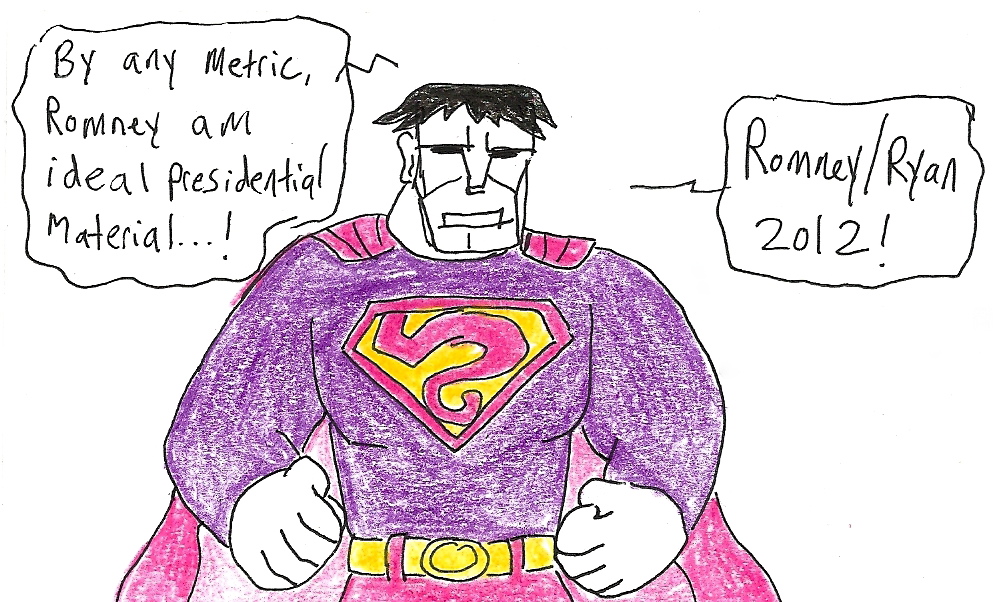
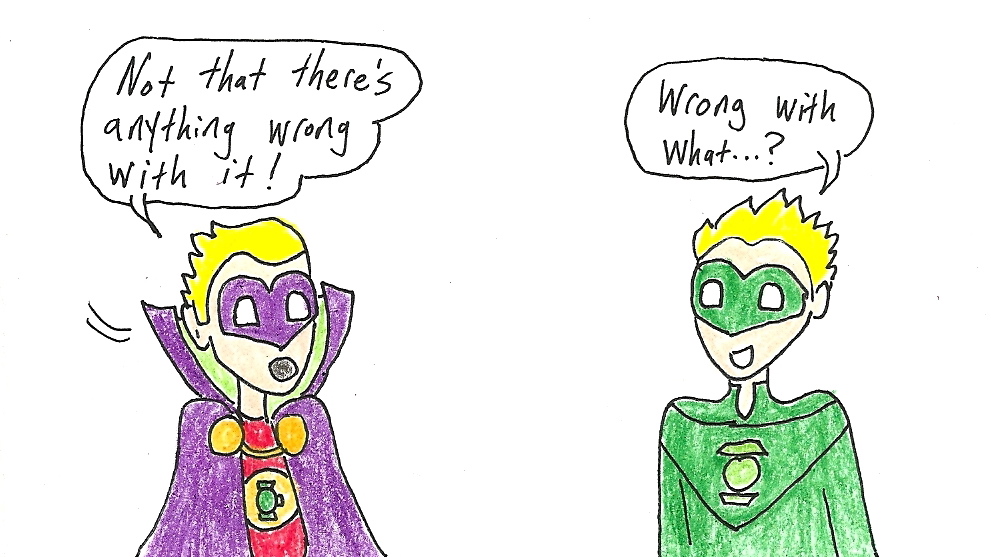
Super-Endorsements 2012:

Comic shop comics: October 31

Aquaman #13 (DC Comics) This is the long overdue conclusion of Geoff Johns, Ivan Reis and company's second story arc on the relaunched Aquaman, concluding a year-long reinvention of the character. Black Manta, whose father was accidentally killed by Aquaman in revenge for Black Manta accidnetally killing Aqauman's dad, has spent a couple of issues killing Aquaman's invented-for-this-story-arc-to-be-killed-off old teammates, "The Others." So Aquaman wants to kill him.

"Manta gutted Kahnia and blew Vostok's spine apart," A-Man tells his wife at one point. "I don't want you to watch what I do to him." And, a few pages later, he repeats the same charges to Black Manta, slightly altering the nature of the injuries: "You murdered my friends. You slit Kahina's throat. You severed Vostok's spine. But I should do even worse to you."

Oh God, how is Aquaman going to brutally torture his archenemy to death...?!

He decides not to brutally kill his archenemy, but instead simply brutally shatters his arm. He has grown! Sorta! He's not a grim, dark, emotionally-tortured, violent vigilante like Wolverine, but a grim, dark, emotionally-tortured, violent vigilante like "Lonely Place of Dying"-Era Batman!

"Don't be like the rest of the world, Arthur," Mera tells our hero during the emotional climax of the issue. "Don't undervalue who Aquaman truly is."

And thus the end of the first year's worth of Aquaman ends as it begun: With the characters histrionically declaring to readers that everyone thinks Aquaman is a joke, but that Aquaman is not a joke. Aquaman, Geoff Johns tells us, has changed. Aquaman, though? Not so much.

This is my last issue of the series. I've been contemplating dropping it for a few months now, but wanted to wait until the story arc ended. Because I am anal.

The issue also includes a seven-page "trailer"-style ad for J. Michael Straczynski and Shane Davis' shitty-looking sequel to their shitty-looking Superman: Earth One; which is a little longer than 1/3 of the story people paid to read in this book.

The Toledo Free Press wonders after why people are crazy for superheroes in movies and, increasingly, on TV, while no one reads superhero comic books. Interviewees Mark Waid suspects the relative lack of comic book shops might have something to do with it and Ethan Van Sciver suspects people might have a hard time reading comics. For real though? They're expensive, they're often of poor quality, they rarely offer a complete reading experience (This complete Aquaman story I just finished? It cost either $17.94 or $38.87, depending on whether you want to read the complete story, or consider the two chapters distinct stories of their own. That's more than a movie ticket, and more than a DVD), and there are seven-page ads for shitty-looking JMS original graphic novels in the back.

I like how Reis drew Aquaman's dog on the cover for no reason though, and that he gave him an Aquaman symbol for his collar. I fucking love superheroes' dogs.


Ghosts #1 (DC) Speaking of expensive comics, this 68-page, nine-story Vertigo imprint anthology costs $7.99. Comics pages-to-dollars, that's not outrageous or anything, but now that we're at $3-4 for 22-pages, these oversized things get to be kind of prohibitively, even ludicrously expensive. At that point, you might as well take out the house ads, ad a spine and sell it as an original graphic novel for $10-$12 bucks.

This another of the imprint's occasional themed anthologies, with this ones theme being ghosts, although not always in the literal, timed for Halloween release sense. In fact, in several of the stories the ghost element in merely metaphorical, and in others its downright tenuous. There's an all-star list of creators contributing, including several of my favorite comics artists (John McCrea! Joe Kubert! Phil Jiminez!), but the stories vary rather wildly. Let's take 'em one by one, shall we?

"The Night After I Took The Data Entry Job I Was Visited By My Own Ghost" by Al Ewing and Rufus Dayglo: This is an old-school horror anthology formula story, complete with twist ending, although recalibrated and set to "comedy" rather than "horror." Like most of those stories written on that formula, it's decent, all building to a "Heh, that's kinda clever" ending. Daylgo's art is a lot of fun, and made me want to find more Dayglo-drawn comics to read.

"The Dead Boy Detectives in Run Ragged Part One: The Isle of Dogs" by Toby Litt, Mark Buckingham (providing layouts) and Victor Santos (finishing Buckingham's pages): This is a fucking weird-ass story, and doesn't seem to belong. It stars a couple of tossed-off characters from Neil Gaiman's Sandman run, one who have been spun-off into enough other comics at this point that people who are not Neil Gaiman have probably written more of their appearances than Gaiman himself has. I'm not familiar with Litt at all, but this story is lame, although that may be the fault of it being crammed into this anthology. It's eight-pages long, features another story in a different style on its third page, and abruptly ends with "To Be Continued in the next Vertigo Anthology..."

Whatever it will be called, whenever it will be scheduled. I guess...?

"Wallflower" by Cecil Castellucci and Amy Reeder: this is one of those symoblic sorts of short stories that comics are quite ideally suited for, being able to tell a story completely through visual metaphor, although there's not much to it. People can become ghosts in one another's lives is the basic point. Nice Amy Reeder art. Like the recent Halloween Eve one-shot she drew for Image, this was a inoffensively so-so story with great art; I hope she gets a truly great script to draw at some point soon.

"The Boy and The Old Man" by Joe Kubert: This is the only piece that gets its very own introduction, perhaps for obvious reasons. I'll have more on it at Robot 6 today (UPDATE: Here, actually). It's great, though. You can see a few images of it, and, come to think of it, pages from most of the other stories, here at ComicsAlliance, if you want to flip-through it and didn't do so in the shop.

"A Bowl of Red" by Neil Kleid and John McCrea: This is a story about supernatural chili, created from a supernatural chili pepper. You've heard of the ghost pepper, but have you heard of the undead pepper...? It's safe to say this is the best supernatural chili comic I've read. Now that I'm thinking about it though, I don't remember any ghosts in it. Save for the ghost pepper, but I think that's cheating. I wonder how many of these were commissioned specifically for this anthology. There are four different editors, which makes me suspicious, and many of these seem like the sorts of stories that would have appeared in Vertigo's old Flinch anthology, which was a pretty good idea for a comic book, well-executed. I heart John McCrea, although I like his art better when it's inked by someone else and/or colored "old-school," I guess.

"Bride" by Mary H.K. Choi, Phil Jimenez and Andy Lanning: No idea who Choi is, but I do like the art team (but not crazy about Andrew Dalhouse's colors on their art; the focus is a little soft and luminescent). This is the story of a decadent, rich eccentric, morning the loss of another decadent, rich eccentric in a decadent, eccentric manner. Eh.

"Treasure Lost" by Paul Pope and David Lapham: Pope is credited with story and art, Lapham with the script. This one's ghost-free, save for this sentence of narration: "An explosion from within took out the pirates' cloaking device and the 'ghost ship' was no more." It's a sci-fi story, in that it has space ships and shit, the pirates being space pirate, but the people who care about the term "science fiction" and its application would likely argue with me calling this "sci-fi," as it's only sci-fi in that his has space ships and shit.

Anyway, it's Paul Pope drawing cool shit. It is a delight. I love the lightning bolt-shaped swords.

"The Dark Lady" by Gilbert Hernandez: The basic twist here is the same as in a recent movie, but I can't name it, or you'll know the twist. It's Gilbert Hernandez though, so, you know, you'll want to look at these pages. It's black and white too, although Lee Loughridge is credited as a colorist, so I guess someone else decided where some of those blacks went. This really makes it stand out from the rest of the book. Really, this is one anthology where individual stories really jump out as looking completely different from one another.

"Ghost-For-Hire" by Geoff Johns and Jeff Lemire: This one was probably the biggest disappointment for me, as it was the one I was most looking forward to checking out. That was mostly because of curiosity. I read a lot of Geoff Johns comics, and think he can be really good at doing what he does, although I do tend to bitch about his writing pretty much constantly (see above). The thing is, what he does is write pre-existing, corporate-owned DC heroes, tinkering with them, directing them, moving them through whatever paces he wants to move them through (or is directed to move them through), but he never writes anything else, so it's extremely difficult to answer simple questions like, say, "Is Geoff Johns a good comics writer?"

Is Geoff Johns a good Green Lantern writer? A good Batman or Superman of Flash or Aquaman or Justice League or Avengers writer? Those can be answered, but his work that isn't buttressed on pre-existing, pre-written characters, generally with a great deal of continuity already behind them, so that he's continuing someone else's story rather than writing his own stories? I can't even think of anything that fits into that category (I think he had an original graphic novel with Butch Guice at one point...?)

Well here's one! And, bonus, it's in an anthology about ghosts, which are scary! And Johns has been shoe-horning violence and horror into his superhero comics, sometimes a lot more than those characters and stories can support without bursting at the seams, for years now—a horror comic is exactly what Johns should be writing, if only to get it out of his system, right?

Well, this isn't really a horror comic story. It's a comedy, although it's not terribly original or funny.

It's about two brothers, one dead and one alive. And a scam they've put together, which is a half-Frighteners sting, essentially.

Lemire's artwork is always fun to look at, and it's quite appropriate for this story, but there's so little to it that it's a thunderous disappointment. Especially if you've been waiting years for a Geoff Johns comic that doesn't feature any character from the cast of any Superfriends cartoons in it, and especially if you wanted to see him tackle a mature readers horror story after years of writing over-the-top gore in his all-ages and "T For Teen"-rated super-comics.

Oh well; this has been a rough week in my love/hate relationship with Geoff Johns' writing, I guess.

Nice cover by Dave Johnson, as always.


Joe Kubert Presents #1 (DC) I'll discuss this at greater length at Robot 6 today (UPDATE: Click here to read that discussion), along with the Kubert story from Ghosts, but suffice it to say its an ad-free, 45-page comic book from DC, featuring a 22-page Kubert Hawkman story, a short story about a poor orphan boy by Kubert, an Angle and the Ape story by Brian Buniak and a war story by Sam Glanzman. As such, it's well worth the $5 price tag. The Hawkman pages especially are sit-and-stare worthy.


Superman Family Adventures #6 (DC) Art Baltazar and Franco really emphasize the Steel-as-the-Heroic-Opposite-of-Lex-Luthor in this story, which formerly inducts Dr. John Henry Irons into the Superman Family as Steel (costume could use a paint job, though), and introduces his niece Natasha into the cast as well. The conflict in this issue involves the introduction of a very Silver Age version of Metallo, made funnier and cuter in Baltazar's style (I love the "OPEN" sound effect that accompanies his chest plate opening to expose Superman to the Kryptonite heart in his chest). There's a nice blend of allusions to various other versions of the characters as well; for example, there's the old Supermobile (sadly, it has grasping claws rather than punching robot fists) and Superman's lead-suit from Superman: The Animated Series appearing in the same panel.

Great stuff, as always and, this issue at least, a little more adventurous and a little less gag-driven than the previous issues and this creative team's previous book, Tiny Titans.

Super-Endorsements 2012: